
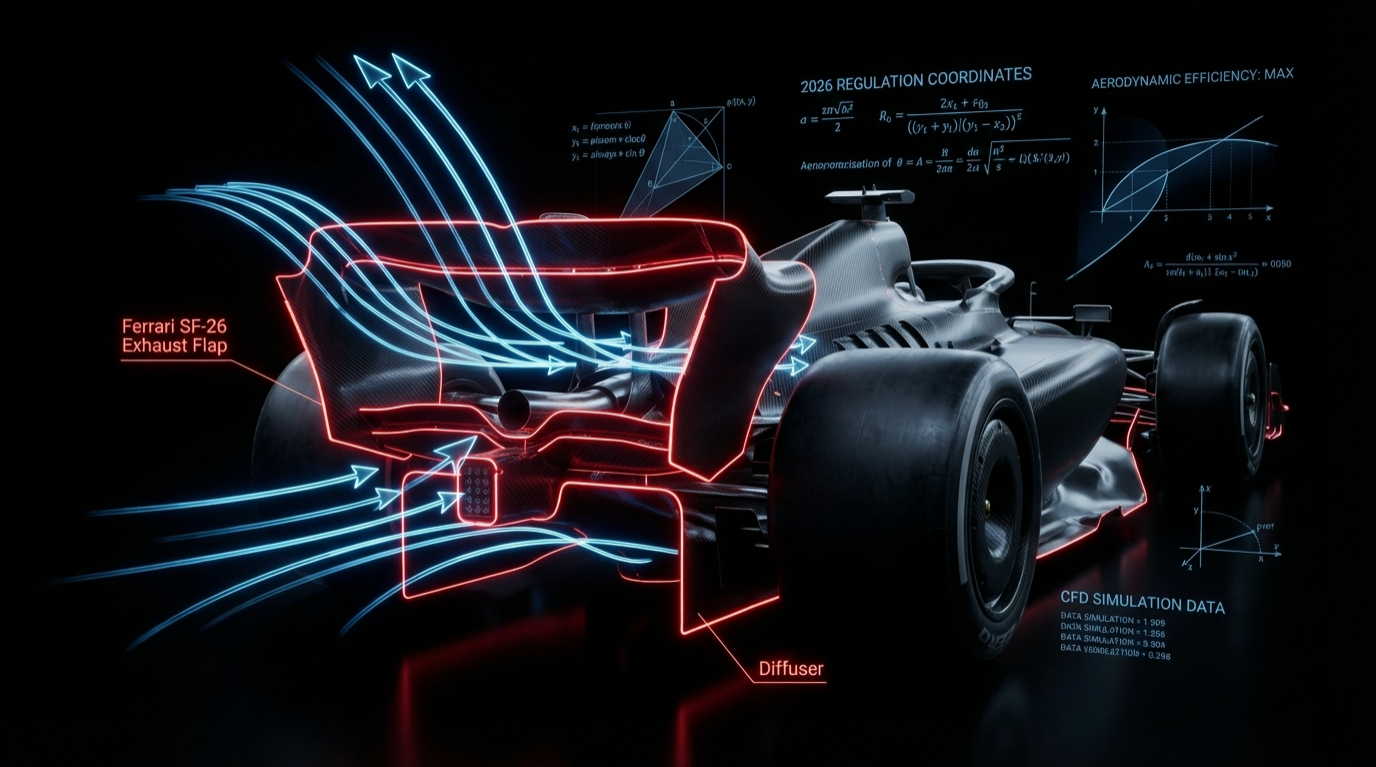
F1’s second pre-season test in Bahrain. Ferrari’s SF-26 rolls out of the garage, and something about the Ferrari SF-26 exhaust flap at the rear of the car doesn’t look quite right.
Within minutes, rival engineers are staring. McLaren boss Andrea Stella is reportedly spotted walking laps around the back of the Ferrari, studying it like he’s trying to crack a safe. Red Bull’s technical director Pierre Waché publicly acknowledges Ferrari’s aggressive boundary-pushing. Even casual observers in the grandstands sense that something significant just happened.
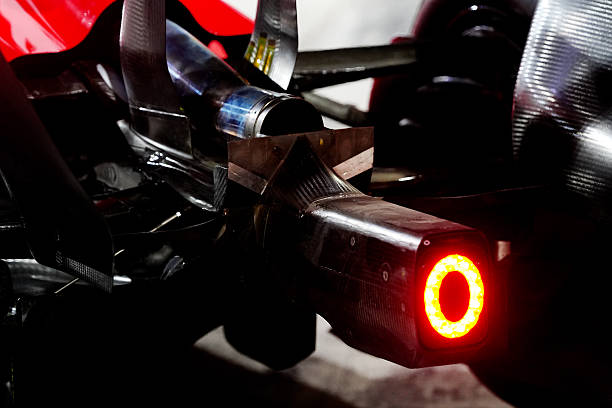
The cause of all this tension? The Ferrari SF-26 exhaust flap, quietly slotted. In a zone where, until very recently, the regulations had made bodywork completely off-limits.
This was not a routine upgrade. Ferrari had spotted something everyone else had missed, built it in secret, got it signed off by the FIA, and debuted it with less than two weeks to go before the Australian Grand Prix. By the time rivals figured out what they were looking at, it was already too late to respond.
What This Flap Actually Does
To understand why the paddock reacted the way it did, you need to know what the Ferrari SF-26 exhaust flap is actually doing on the SF-26.
For years, the area directly behind the exhaust tailpipe has been a restricted zone in F1. The FIA knew perfectly well that hot, high-velocity exhaust gas is an incredibly powerful aerodynamic tool if you can point it in the right direction. Teams had exploited this before, most famously with “blown diffusers” in the early 2010s, and the regulations were specifically written to prevent a repeat.
Then came the 2026 technical overhaul. In rewriting the rulebook from scratch, the FIA inadvertently opened up a small permitted volume near the exhaust exit. Ferrari’s engineers found it. Nobody else acted on it.
The flap they built does two things simultaneously. It redirects hot exhaust gases upward toward the rear wing, essentially feeding the wing a constant stream of energized airflow that makes it generate more downforce than it otherwise would. At the same time, it helps pull airflow through Ferrari’s rear diffuser more efficiently, cleaning up the pressure distribution at the back of the car. More downforce, better balance, cleaner aerodynamics. All from one small component that fits in the palm of your hand.
Before it could race, Ferrari needed explicit approval from the FIA given how close the flap sits to the rear axle, a zone with its own strict set of bodywork rules. That approval came through. F1 technical analyst Sam Collins called it “a really clever bit of lateral thinking” from the Maranello engineers, and it’s hard to argue with that.
The Real Reason Nobody Can Copy It
Ferrari made a decision months ago, long before pre-season testing, to extend the rear diffuser on the SF-26 further back than any other team on the grid. At the time, nobody outside the Ferrari factory knew why. Now it’s obvious.
That extended diffuser is the structural foundation the exhaust flap relies on to work. Without it, the flap doesn’t deliver the same aerodynamic effect. And rebuilding a diffuser isn’t something a team can do over a weekend. It requires fundamental changes to the car’s architecture that take months of design work, simulation, and manufacturing.
But the second barrier is even harder to get around. The legality of the flap is directly tied to how Ferrari positions the differential inside their specific gearbox casing. Technical analysts have suggested this makes it essentially impossible for any team not running Ferrari’s gearbox to replicate the design in their current car. At present, that only leaves Haas with any realistic path to copying it, as Ferrari’s sole customer gearbox team.
Everyone else is locked out, not because they were too slow to react, but because they would need to fundamentally redesign their cars first.
Ferrari Arrived in 2026 Ready to Fight
The exhaust flap was not the only talking point Ferrari brought to Bahrain. They also briefly tested what the paddock quickly dubbed an “upside-down” rear wing on Lewis Hamilton’s car. While every other team uses a 90-degree rotation when the 2026 active aerodynamics switch to low-drag mode on the straights, Ferrari’s wing rotates a full 270 degrees, flipping completely inverted. It borrows principles from aircraft wing design to slash drag in a way nobody else has attempted.
The FIA confirmed it legal. Whether it makes the Melbourne grid is still unclear, but the intent behind it is not.Charles Leclerc and Hamilton both ran well throughout the test, with Leclerc clocking the third-quickest time on the day the exhaust flap was introduced. The Oldest Trick in the F1 Playbook, Executed Perfectly
Ferrari has not invented a new way to win in Formula 1. They have simply executed the oldest way better than anyone else right now. Find a gap in the rules, build something nobody is expecting, get it approved, and debut it at the moment rivals have the least time to respond.
Double diffusers, F-ducts, blown exhausts. Every era has its defining technical masterstroke. The 2026 season may well be remembered for a small flap behind an exhaust pipe, and the team clever enough to see it before anyone else did.
The racing has not even started yet. Ferrari is already winning.