
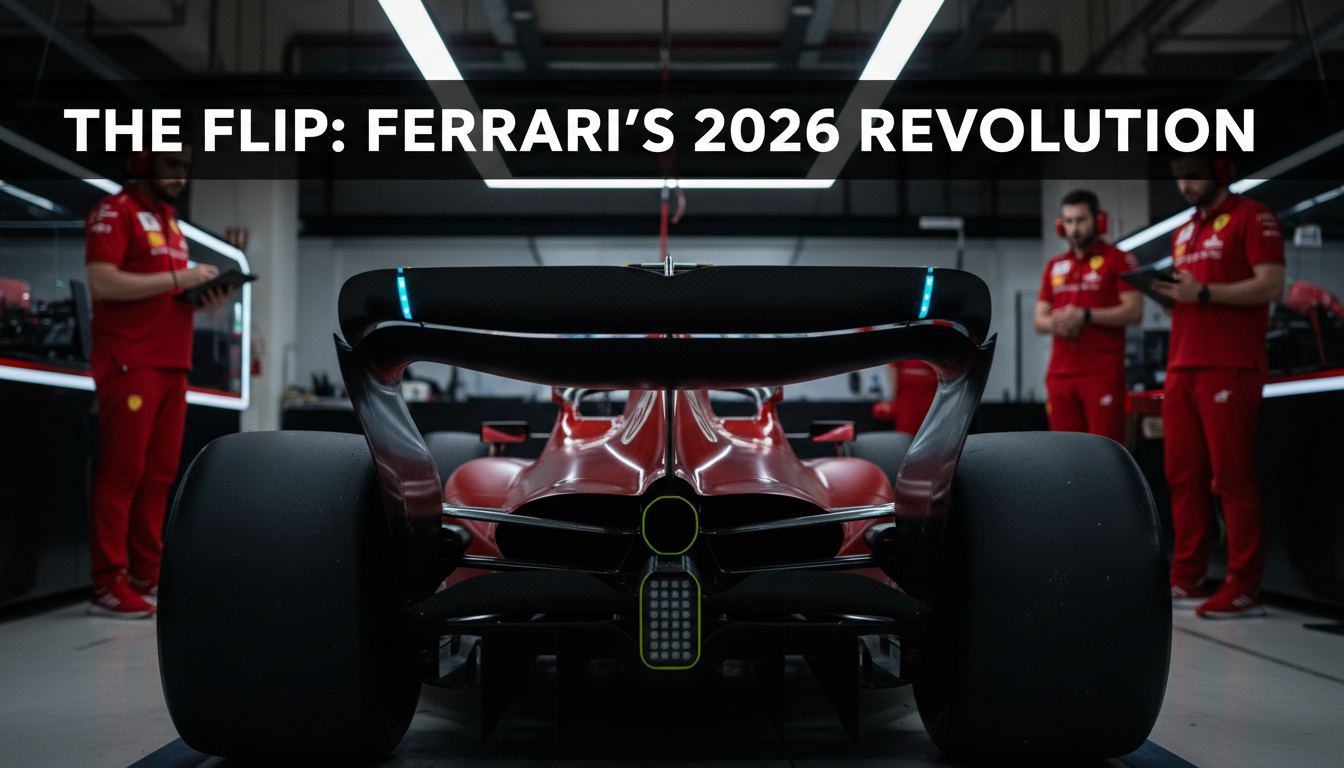
Ferrari snatched the headlines today when they debuted a Ferrari rotating rear wing during the 2026 pre-season test. This design defies all conventional aero logic. I watched Lewis Hamilton’s SF-26 at Turn 1 today. Consequently what I saw triggered immediate frantic calls between rival technical directors. Crucially this isn’t just another DRS evolution.
Most teams use standard flap activation. Instead Ferrari’s upper element flipped a full 180 degrees on the main straight. Therefore the wing turns upside down. It mimics an aircraft wing to erase drag entirely. Meanwhile the paddock whispers suggest this Ferrari rotating rear wing is the silver bullet for 2026.. This rotating rear wing effectively solves the energy recovery crisis. Furthermore Hamilton and Charles Leclerc can preserve battery power. Ferrari has clearly seized a loophole in the new “Straight Mode” regulations. To the horror of Red Bull these rules lack a maximum rotation angle.
The 180-Degree Flip Architecture Exposed
Ferrari’s design team abandoned the old letterbox opening entirely for 2026. Alternatively the SF-26 utilizes a central pivot point that allows the flap to rotate until it is completely inverted. This aggressive geometry change doesn’t just reduce drag. It actively creates lift to unweight the rear tires and reduce rolling resistance. Consequently this helps the car hit higher top speeds without relying on pure engine power. Rivals are already crying foul to the FIA about the intent of the device. Regardless the current rulebook is silent on flap orientation. Competitors immediately questioned the legality and the FIA ruling on Ferrari’s flap design prevented any team from replicating it.
The team is using an innovative hydraulic system housed within the endplates. This removes the bulky central actuator seen on the Mercedes and Red Bull cars. As a result the airflow over the beam wing remains exceptionally clean. Engineers believe this inversion stalls the entire rear assembly more effectively than any previous DRS. Therefore Ferrari has found a way to “cheat” the air into thinking the wing has vanished. This transition must happen in under 400ms to remain legal. Despite the complexity the system appears robust during initial high-speed runs.
Hamilton and Leclerc Weaponize the Loophole
In the cockpit the feedback from the drivers is night and day. For example Charles Leclerc snatched the fastest time of the morning with a 1m33.739s. He used the unmarked C3 compounds to set this benchmark. The car is noticeably calm under load despite the radical aero shifting at 330kph. Subsequently Lewis Hamilton focused on long-run simulations for the team. He found terrifyingly flat tire degradation curves during his thirty-lap stint.
The SF-26 appears to have solved the hybrid deployment issues that are currently plaguing the new 2026 power units. Specifically the car manages its 350kW electrical boost with surgical precision. By using the upside-down wing Ferrari saves nearly 15% of its battery per lap. This surplus allows Hamilton to attack at the end of every straight. Moreover the seven-time champion stated that he finally feels “connected” to the car’s DNA. This is a far cry from his struggles during the previous regulation cycle. Therefore the paddock is on high alert. If Hamilton is comfortable with a car this radical the rest of the grid is in serious trouble.
The Technical Pincer Movement and Diffuser Interaction
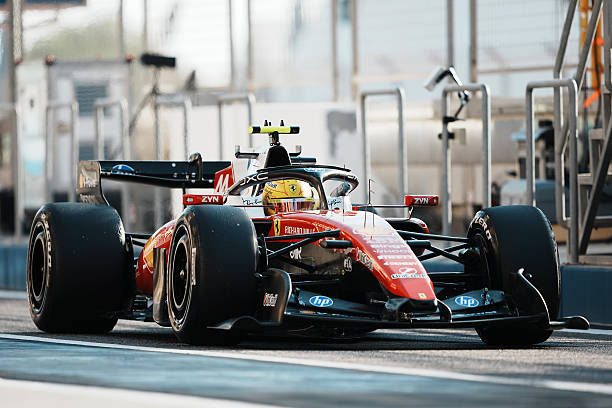
This wing innovation doesn’t exist in a vacuum. Rather it works with a secondary “exhaust wing” located above the diffuser. This device blows hot gases across the rear aero surfaces to provide low-speed downforce. Additionally Ferrari uses the upside-down wing to dump drag on the straights. They have neutralized the traditional penalty of running high-downforce setups in the corners. This pincer movement allows the SF-26 to be both a monster in the twisty sectors and a rocket on the straights. Ferrari’s wing exploits a grey area within the 2026 technical regulations that rivals believe should not exist.
Moreover the interaction between the Ferrari rotating rear wing and the oversized diffuser is genius. It prevents the airflow from detaching too early when the car is in “Straight Mode.” Consequently the car maintains better stability during the transition back to “Corner Mode.” Rival teams like Audi and Alpine have tried different solutions but none are this aggressive. Ferrari’s 067/6 power unit also benefits from this efficiency. Less drag means less fuel consumption from the sustainable 100% bio-mix. Ultimately the SF-26 represents a total rethink of how an F1 car moves through the air. This development war is just beginning.
2026 Fact Check The New Reality
- Shorter Wheelbase The 2026 cars are 200mm shorter making them more agile in tight sectors but more aero-sensitive.
- The 400ms Rule FIA regulations mandate that all active aero transitions must be completed within this tiny window.
- The Weight Fight Ferrari’s complex rotation motor puts them at risk of exceeding the new 768kg minimum weight limit.
- Power Unit Paradox Drag reduction is now the primary way to avoid electrical “clipping” at the end of long straights.
- The MGU-K Surge Electrical power has skyrocketed to 350kW in this new era which is nearly triple the 2025 output.
- Manual Override Mode Drivers unlock an extra energy boost when close to a rival to replace the old DRS advantage.
- Sustainable Fuel Ferrari’s 067/6 unit runs on 100% non-fossil carbon fuels which changes internal combustion cooling needs.



3 Comments