Red Bull’s 2026 crisis did not come out of nowhere. Three races into the new season, the team that won four consecutive championships is stuck in the midfield. Max Verstappen has no podiums and sits ninth in the standings. The car loses time in every corner. Key people keep walking away. And Verstappen already has a legal path to leave if results do not improve by summer.
The RB22 Got the Concept Wrong From Day One
When Red Bull designed the RB22, they built the car around low drag, sacrificing downforce to gain speed on the straights. In theory, the 2026 rules made that a sensible bet, because the new power units put more emphasis on straight-line electrical performance. In practice, it left them with a car that cuts through the air cleanly but falls apart in corners, which is where lap times are actually made or lost.
Why the RB22 Loses Time in Every Corner
The handling problems are not subtle. Verstappen said every setup change made zero difference, describing the car as something he had to survive rather than drive. Telemetry from China showed him nearly a second off pole. The rear was loose from corner one, Verstappen catching it with corrections almost constantly.
The energy recovery system makes it worse. Red Bull harvest power at much lower speeds than Mercedes, which means less electrical boost on corner exit. Less power, less grip, more tyre destruction. Verstappen was through a set of softs in seven laps in China. That is not a driver problem.
The real issue is structural. Red Bull have chased low drag at the cost of downforce. No setup tweak fixes that over a race weekend. They came into 2026 with the wrong concept and are paying for it now.
Race Starts That Keep Dropping Verstappen Back
Another repeated problem is the race start. Under 2026 rules, the MGU-H is gone. That was the device that kept the turbo spinning between corners in previous cars. Without it, drivers must manage battery energy very carefully on the formation lap to get a clean launch off the line. Red Bull has not solved this. Verstappen dropped from eighth to seventeenth on the first lap of the China Sprint. In both Melbourne and Shanghai, he cited dead battery at launch as the cause, confirming the same issue returned in Japan.
Verstappen confirmed after China the issue remained consistent, saying he had no power when he released the clutch and the engine simply was not there. Red Bull’s 2026 start-line struggles alone cost him points at every race before the real racing had even begun.
The People Who Built Red Bull Are Gone
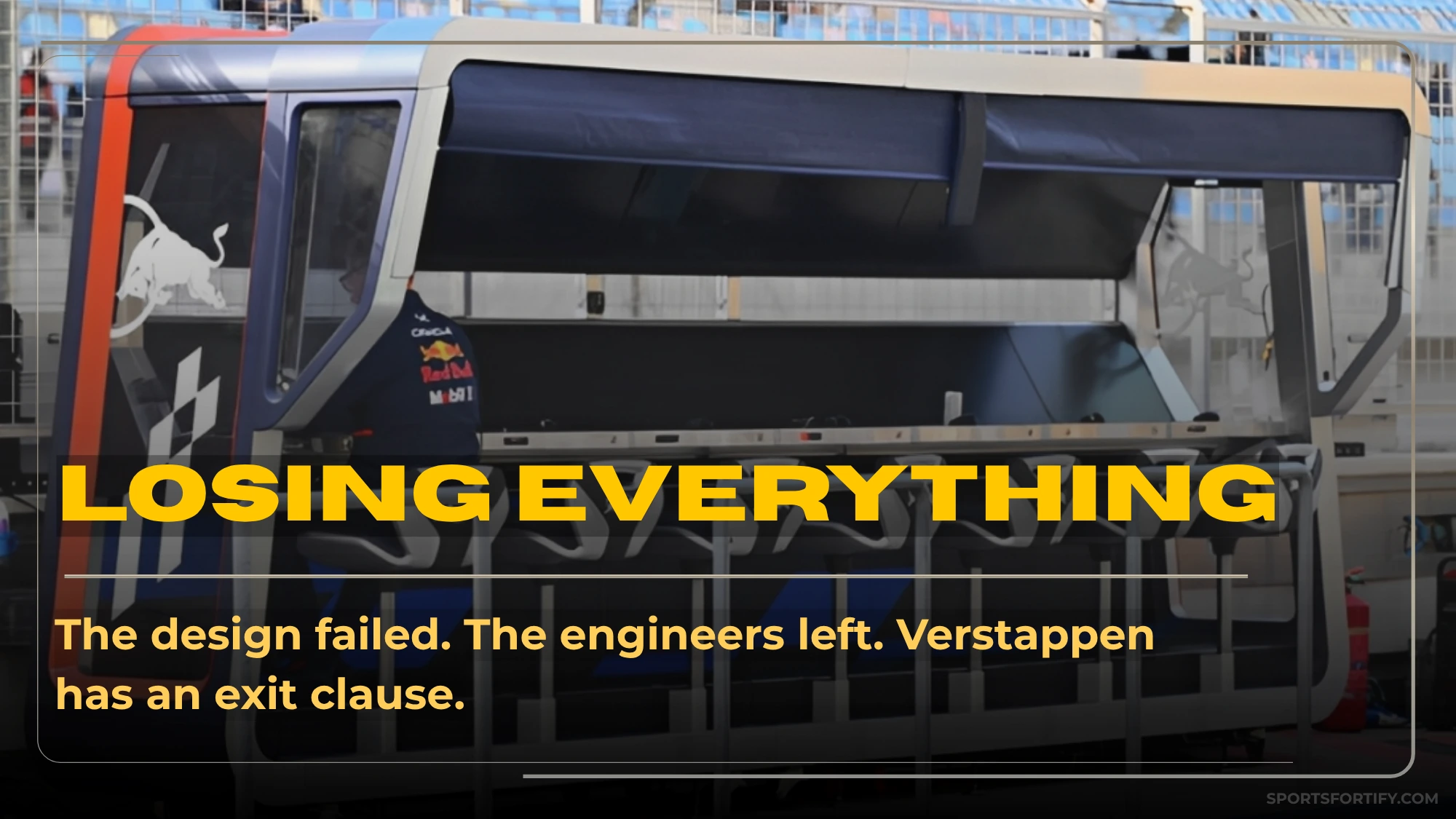
Red Bull’s 2026 crisis extends well beyond the track. Over the past two years, the team has lost almost every key figure from their dominant era. Adrian Newey left for Aston Martin. Jonathan Wheatley followed. Christian Horner was fired as team principal. Helmut Marko, who shaped the driver programme for decades, stepped aside. Rob Marshall and Will Courtenay had already gone to McLaren before any of them. The departures have been relentless.
Now Gianpiero Lambiase, who has been Verstappen’s race engineer since 2016, is heading to McLaren as Chief Racing Officer. He helped Verstappen win all four world titles and was the voice on the radio through every race. Verstappen once said he would stop racing if Lambiase left. His father now says things have changed since that comment, but the timing is impossible to ignore. The team environment has become chaotic, with no clear communication to the outside world.
Verstappen Is Not Hiding How He Feels
Verstappen has been unusually direct about his unhappiness. He called the 2026 cars a joke after retiring from China and compared the racing experience to Mario Kart, saying the cars are anti-racing and dilute the challenge of actual Formula 1 driving. At the Japanese GP, he reflected on his future and said he had a lot of things to figure out about life in the paddock. These comments keep coming. They point to a driver who is genuinely disconnected from what Formula 1 has become under the new rules.
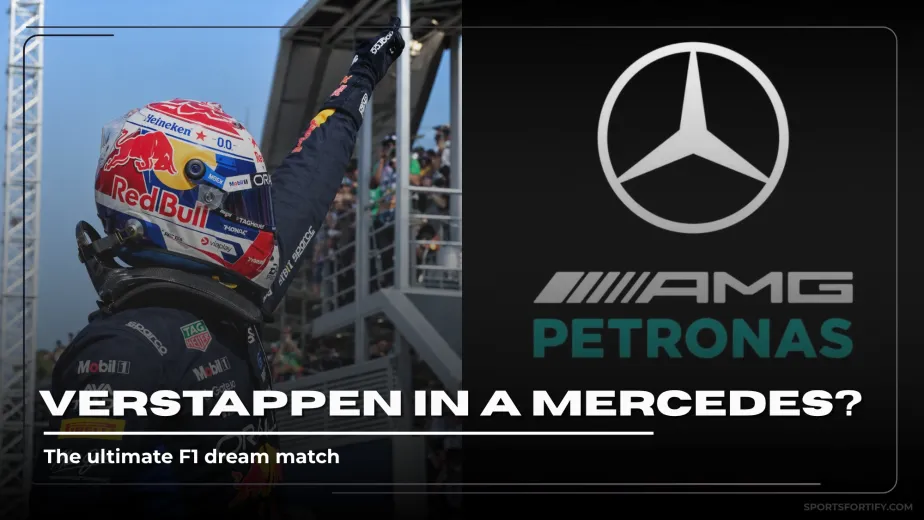
Furthermore, the contract situation gives his frustration real weight. Verstappen has a performance exit clause that allows him to leave Red Bull if he sits outside the top two in the championship at the summer break. The clause was added to his contract specifically because of his long standing concerns about the 2026 regulations. Currently ninth with 12 points while the championship leader holds over 70, closing that gap before August looks almost impossible.
Can Red Bull Fix This in Time
However, Red Bull’s 2026 crisis stems from design choices, not from a lack of resources. The power unit, built in-house with Ford for the first time, is reportedly performing close to the Mercedes benchmark, which is widely regarded as the best engine on the grid. That is a genuine achievement for a brand-new engine programme. The team used the five-week gap between Japan and Miami to work on chassis upgrades. If those fixes arrive and work, the engine is good enough to be competitive.
Still, the road back is steep. Red Bull currently sit sixth in the constructors standings, stuck in the midfield, with their worst three-race points total since 2015. Updates take time to produce actual race results. The exit clause window opens in August. With Lambiase leaving and Verstappen visibly unhappy, Red Bull need more than a faster car. They need to give their best driver a reason to stay.