
Three days at the Bahrain International Circuit. Eleven teams. Twenty-two drivers. And a timesheets story so distorted by political theatre that reading it straight would be genuinely naive. The F1 2026 Bahrain test sandbagging debate didn’t simmer. It detonated, and it did so before the dust from Day One had even settled.
Kimi Antonelli closed the test fastest overall, clocking a 1m33.669s on Friday afternoon that Mercedes couldn’t have telegraphed any louder if they’d tried. George Russell went quickest in the morning session at 1m33.918s. Lewis Hamilton slotted in third overall. Nobody else cracked 1m34s. The gap to Max Verstappen’s Red Bull of 1m35.341s was not subtle. It was a statement. And it immediately triggered a furious paddock debate over who, exactly, is pulling punches.
Verstappen Fires the First Shot
Verstappen didn’t bite his tongue. He rarely does. The reigning four-time champion publicly accused Mercedes of extreme sandbagging, suggesting the Silver Arrows deliberately suppressed their engine output ahead of a critical FIA Commission meeting scheduled for next week. The agenda item in question? The engine compression ratio controversy that has engulfed the paddock since December 2025.
“They are sandbagging. It’s obvious. You can see it on the straights. They are not showing what they have.” — Max Verstappen, Bahrain Test Day 3.
Crucially, Verstappen’s accusation carries a specific political charge. If Mercedes is deliberately hiding straight-line advantage right now, it directly shapes how the FIA perceives the severity of any compression ratio rule adjustment. Consequently, the F1 2026 Bahrain test sandbagging isn’t just competitive theatre. It’s regulatory chess. Russell fired back, insisting Mercedes “took a step back” from Barcelona. Meanwhile, a Mercedes 1-2 on the timesheets stared back at him from the board. Make of that what you will.
What the Data Actually Exposes
Strip away the press conference fog, and the lap time architecture tells a sharper story. Antonelli and Russell planted themselves a full second clear of Hamilton’s Ferrari and nearly 1.7 seconds ahead of Verstappen’s RB21. Yet the long-run pace, where fuel loads and engine modes are far harder to mask, revealed Ferrari as a genuine threat hiding in plain sight.
Hamilton completed a long run on Friday that proved quicker than Oscar Piastri’s McLaren while both were on track simultaneously. Ferrari team boss Fred Vasseur refused to discuss performance publicly, which in paddock language means they’re hiding something encouraging. McLaren boss Andrea Stella subsequently named Mercedes and Ferrari as the two teams to beat. That assessment, from a reigning constructors’ champion’s camp, demands respect.
Red Bull Ford — The Quiet Weapon
Furthermore, don’t let Red Bull’s timesheets lull you into dismissing them. The new Red Bull Ford Powertrains unit, making its official public debut across this test, seized attention on the straights throughout all three days. Russell himself nominated Red Bull as “the team to beat.” That’s not throwaway praise from a rival. Russell earned his place at the front of that timesheet. He knows what raw straight-line speed looks like.
The RB21 and its Racing Bulls sibling combined for over 670 laps across the week. The Ford engine ran reliably from the first shakedown lap to the last in Bahrain. Verstappen’s public frustration with the car’s drivability, calling the new hybrid architecture “Formula E on steroids” and “anti-racing,” remains genuine. But reliability plus a powerful deployment system is a foundation. Red Bull builds championships on foundations.
The Real Losers Have No Excuse Left
Meanwhile, Aston Martin exposed themselves in a manner that no amount of spin can salvage. Lance Stroll admitted the AMR26 sits roughly four-and-a-half seconds off the pace. The team completed just 206 laps, the fewest of any constructor, barely half that of McLaren and Williams. Adrian Newey’s promised revolution crushed Aston Martin’s 2026 hopes before a single point has been scored.
Fernando Alonso managed fewer than 100 laps. Stroll scraped past 108. For a team that gambled its entire trajectory on the 2026 rules reset, these numbers aren’t just disappointing. They’re alarming. The Australian Grand Prix opener in March arrives like a verdict they’ve already written for themselves.
Aston Martin brought the fewest laps, the most problems, and a four-time world champion who looked furious in the garage.
What the Pecking Order Actually Looks Like Right Now
The honest read, after sifting through fuel-corrected long runs, mileage data, and conversations whispered outside the hospitality units, produces this snapshot heading into Test Two.
- Mercedes — Dominant but embattled. Their raw pace on softs is genuine. Their engine advantage may be legislatively time-limited. The Commission vote next week could reshape everything they’ve built this winter.
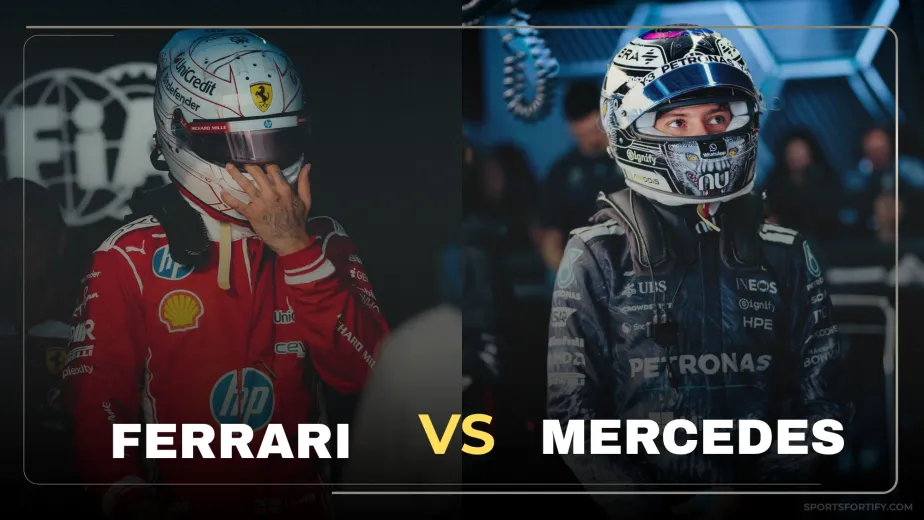
- Ferrari — The stealth contender. Hamilton’s long-run data triggered real alarm in McLaren’s pit wall. Leclerc reportedly warned a rival engineer that a team is “hiding a massive amount.” He was almost certainly describing his own.
- Red Bull Ford — Underplayed and dangerous. The engine deployment on straights turned heads all week. Verstappen’s hatred of the car’s drivability is real, but his ability to extract performance from problematic machinery is historically unprecedented.
- McLaren — Mileage kings, pace question marks. Norris and Piastri combined for over 420 laps, joint highest alongside Williams. Norris spoke of “good learning.” Teams only talk about learning when they’re deliberately not showing pace.
- Aston Martin — Crisis mode. Newey’s car is structurally slow and reportedly difficult to drive. They arrive at Test Two with an architecture problem, not a setup problem. That distinction is devastating.
- Cadillac — Quietly impressive. Over 1,700km completed for the American debutants across the full test. Perez and Bottas each ran race simulations. They’ll start at the back in Melbourne but they will actually start, which is more than some feared twelve months ago.
The Test Two Reckoning Arrives Tuesday
Test Two opens on February 18th. By then, the FIA Commission will have met. The compression ratio outcome may already be delivered. Mercedes will either arrive in Bahrain with the same suppressed engine mode, or they’ll be forced to show their true hand in a very different regulatory landscape.
The F1 2026 Bahrain test sandbagging story isn’t resolved. It’s accelerating. Every team watched every other team this week with the cold calculation of a poker player counting cards. Russell claims they stepped back. Verstappen claims they’re hiding. Hamilton ran the fastest long run of the test. And Antonelli, twenty years old and already steering a potential world championship machine, simply drove the fastest lap of the week and went home.
The sandbagging debate will rage until Melbourne settles it in March. Until then, trust nothing you see on a timesheet. And trust nobody who tells you they know exactly where the pecking order stands.


1 Comment