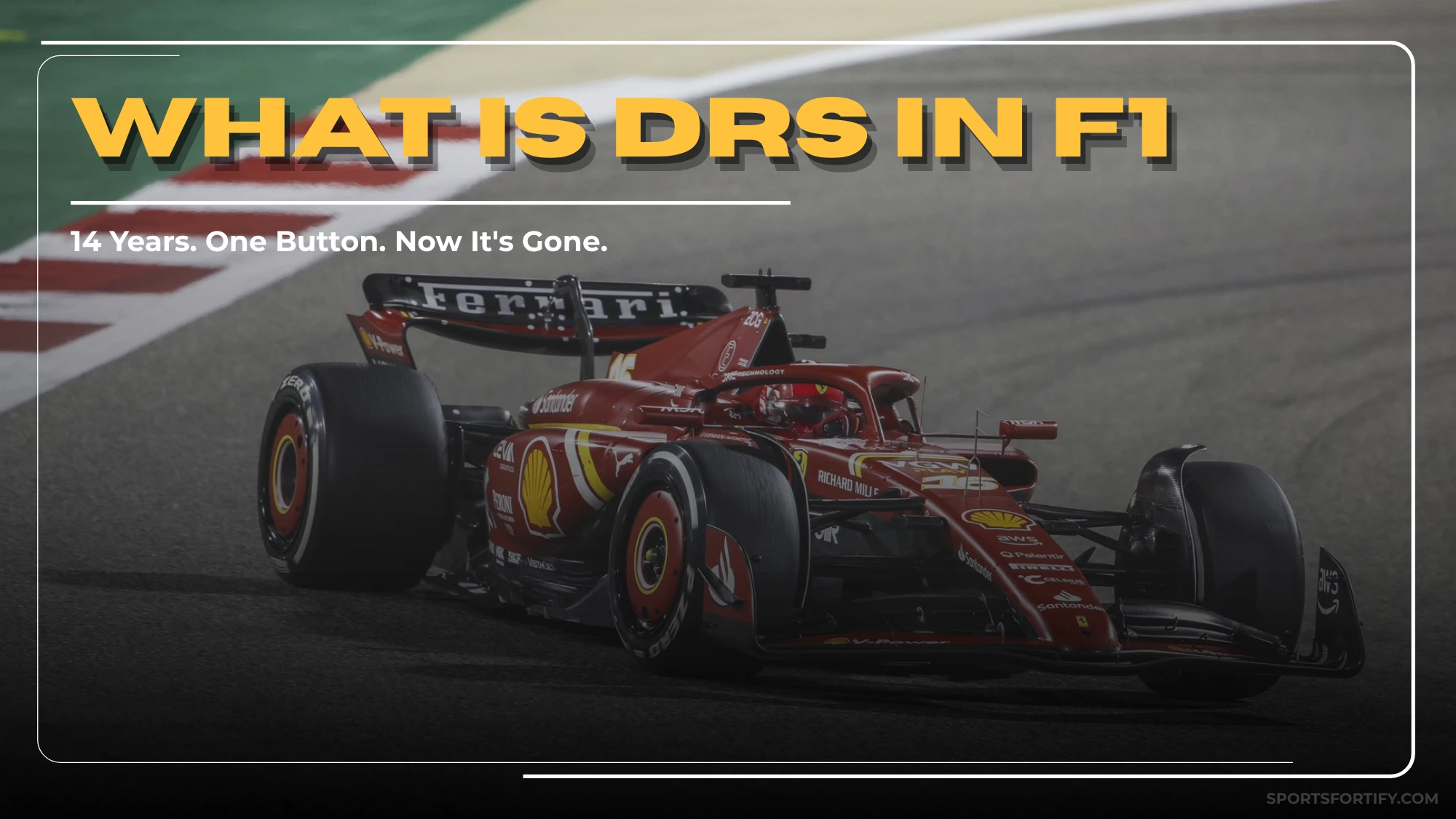
DRS ran Formula 1 for 14 years. Drivers loved it, fans argued about it endlessly, and the FIA called it temporary from day one. Now it is gone for good. If you are trying to understand what the system actually was and why the sport moved on, here is everything you need.
What Is DRS in F1 Racing
DRS is a movable flap on the rear wing of an F1 car. When a driver activates it, the flap opens up and the car cuts through the air more cleanly on a straight. The result is extra speed without the driver pressing harder on the throttle.
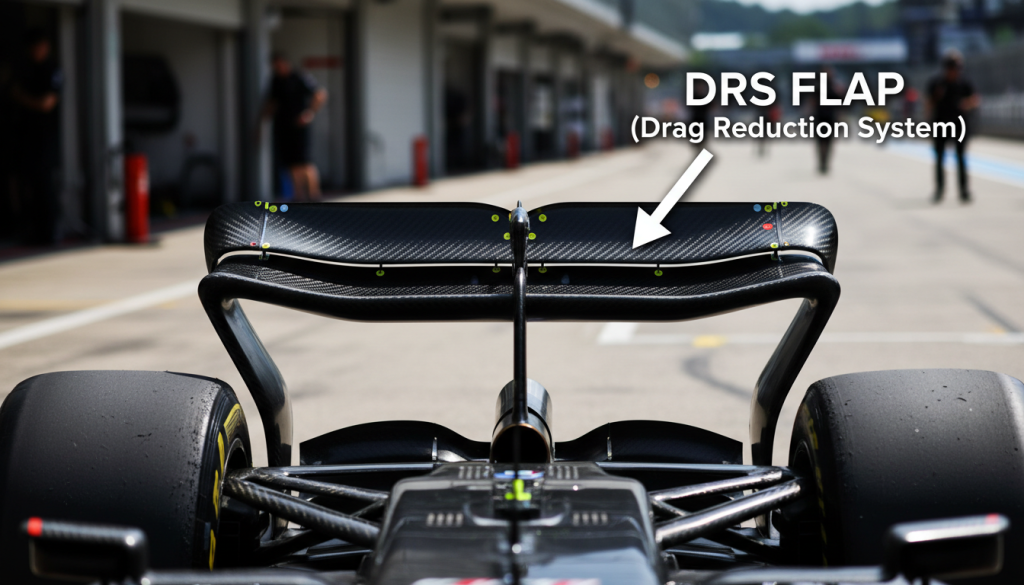
The speed gain sounds small but it matters in F1. Opening the rear wing reduced aerodynamic drag by up to 25% and added roughly 10 to 15 kilometres per hour added roughly 10 to 15 kilometres per hour on the straight, pushing top speed noticeably higher in a grand prix. In a sport where races are decided by tenths of a second, those extra kilometres per hour were the difference between a clean overtake and following someone for 20 laps going nowhere.
What Does DRS Stand For in F1
DRS stands for Drag reduction system is exactly what the name says.. Drag is the air resistance pushing against the car as it moves forward at high speed. By opening the rear wing flap, the car produces less drag and moves faster down the straight. The system had one job and it did that job well. Reducing aerodynamic drag was the entire point of the system.
How Did DRS Work During a Race
Drivers could not activate DRS whenever they felt like it. The system had strict rules built around it.
A driver needed to be within one second of the within one second of the car in front at a specific point called the detection point. at a specific point on track called the detection zone. If the gap was close enough at that point, DRS became available for the next section of the lap called the DRS zone, which was always placed on a straight. The driver then activated it manually with a button on the steering wheel.
Qualifying worked differently. Drivers could use DRS in the designated zones without needing to be close to another car. This is one reason qualifying lap times are so much faster than race pace.
DRS was also unavailable on the opening lap of a race and after any safety car period. The FIA required at least one lap of racing before the system became active again. This was to stop drivers using it before the field had properly spread out.
When Was DRS Introduced in F1
DRS arrived in F1 at the start of the 2011 season. But the race that pushed the FIA to act happened a year earlier.
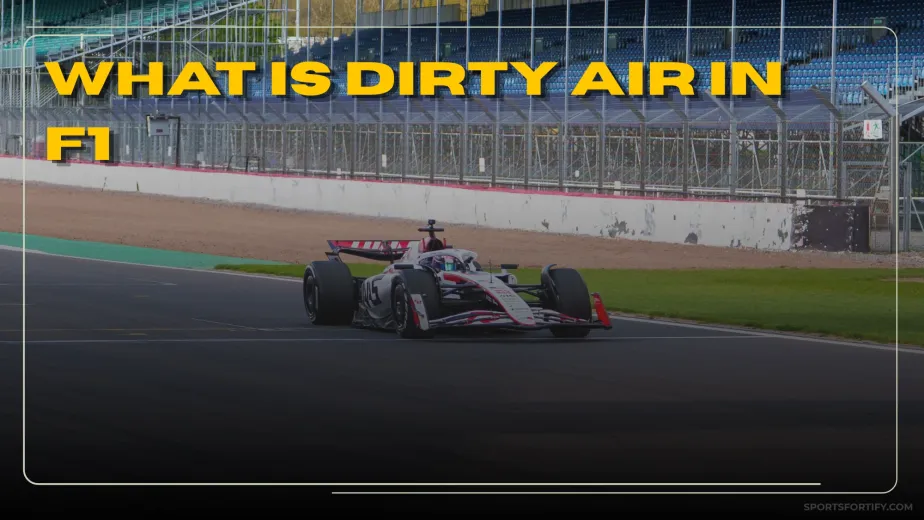
The 2010 Abu Dhabi Grand Prix is the race that changed everything. Fernando Alonso was fighting for the championship and found himself stuck behind Vitaly Petrov’s Renault for most of the race. Alonso had a clearly faster car. It did not matter. The dirty air coming off Petrov’s car disrupted Alonso’s aerodynamics through every corner and he could never get close enough on the straights to pass.
That race made the overtaking problem impossible to ignore. F1 cars had become so aerodynamically complex that following another car closely was nearly impossible. The FIA introduced DRS the following season. It stayed for 14 years despite always being described as a temporary measure.
Jenson Button was the first driver to use DRS in a race. Kimi Antonelli was the last, at the 2025 Abu Dhabi Grand Prix.
Why Did F1 Get Rid of DRS
The criticism of DRS was always the same. It felt artificial. When it worked too well, overtakes looked too easy. A driver would get close enough to activate it, press the button, and drive past without any real wheel-to-wheel battle. A lot of fans felt that removed the excitement from racing.
The bigger problem was that DRS never fixed the actual issue. The real problem in F1 is dirty air. When a car travels at high speed it creates turbulent air behind it. A following car driving through that turbulence loses downforce in the corners and falls back. DRS helped on the straight but did nothing about what happened through the rest of the lap. The car behind was still being disrupted everywhere except the one place DRS activated.
For 2026 the FIA decided to address the root cause rather than keep patching around it. The new cars produce less disruptive wake, which makes it genuinely easier to follow closely through corners. Once that problem was solved at the design level, DRS became unnecessary.
What Replaced DRS in F1
Two systems replaced DRS for the 2026 season.
- The first is Active Aerodynamics. Every driver on the grid can switch between two wing modes. X-Mode reduces drag on the straights for maximum top speed. Z-Mode increases downforce through the corners for better grip and stability. This is available to everyone all the time, regardless of their position in the race.
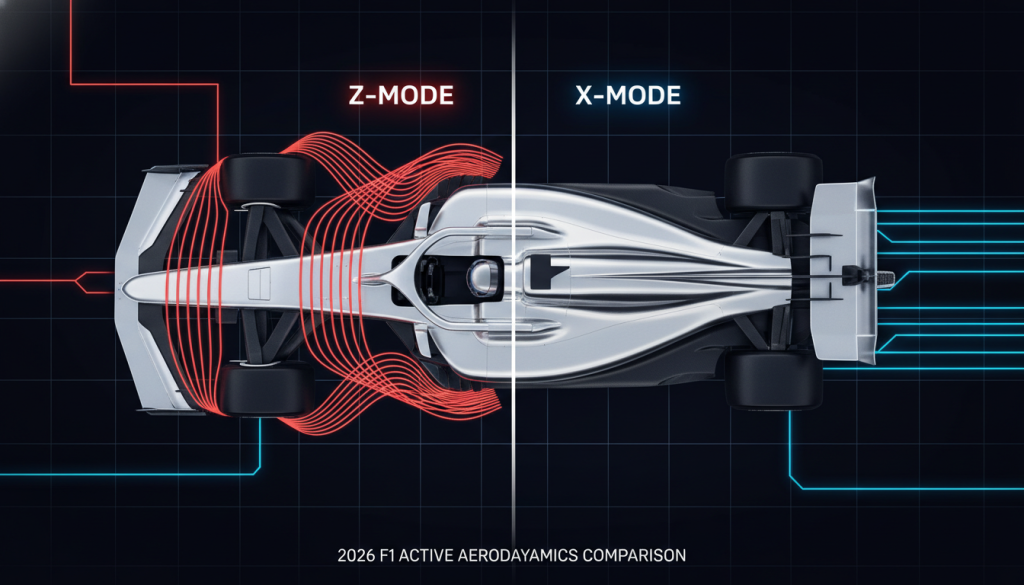
- The second system is Manual Override Mode and this is the actual overtaking tool. When a driver is within one second of the car ahead, they gain access to extra electrical energy for the following lap. Unlike DRS, they can deploy that energy wherever and whenever they choose on that lap. It requires timing and racecraft rather than just pressing a button at a fixed point on the track.
The 2026 power units make this possible. The electrical component jumped from 120 kilowatts to 350 kilowatts, nearly three times the electrical power available before. That increase is what gives Manual Override Mode real impact as an overtaking aid rather than just a small boost.
FAQ
DRS means Drag Reduction System. It was a movable rear wing flap that opened on straights to reduce drag and help the chasing driver gain speed for an overtake.
DRS was introduced at the start of the 2011 season. Jenson Button was the first driver to use it in a race.
DRS felt artificial and never solved the real problem of dirty air. The 2026 regulations redesigned the cars to produce a cleaner aerodynamic wake, which made DRS unnecessary.
DRS was replaced by Active Aerodynamics and Manual Override Mode. Active Aerodynamics lets all drivers switch between a low-drag mode for straights and a high-downforce mode for corners. Manual Override Mode gives the chasing driver extra electrical energy to deploy as an overtaking tool.

4 Comments