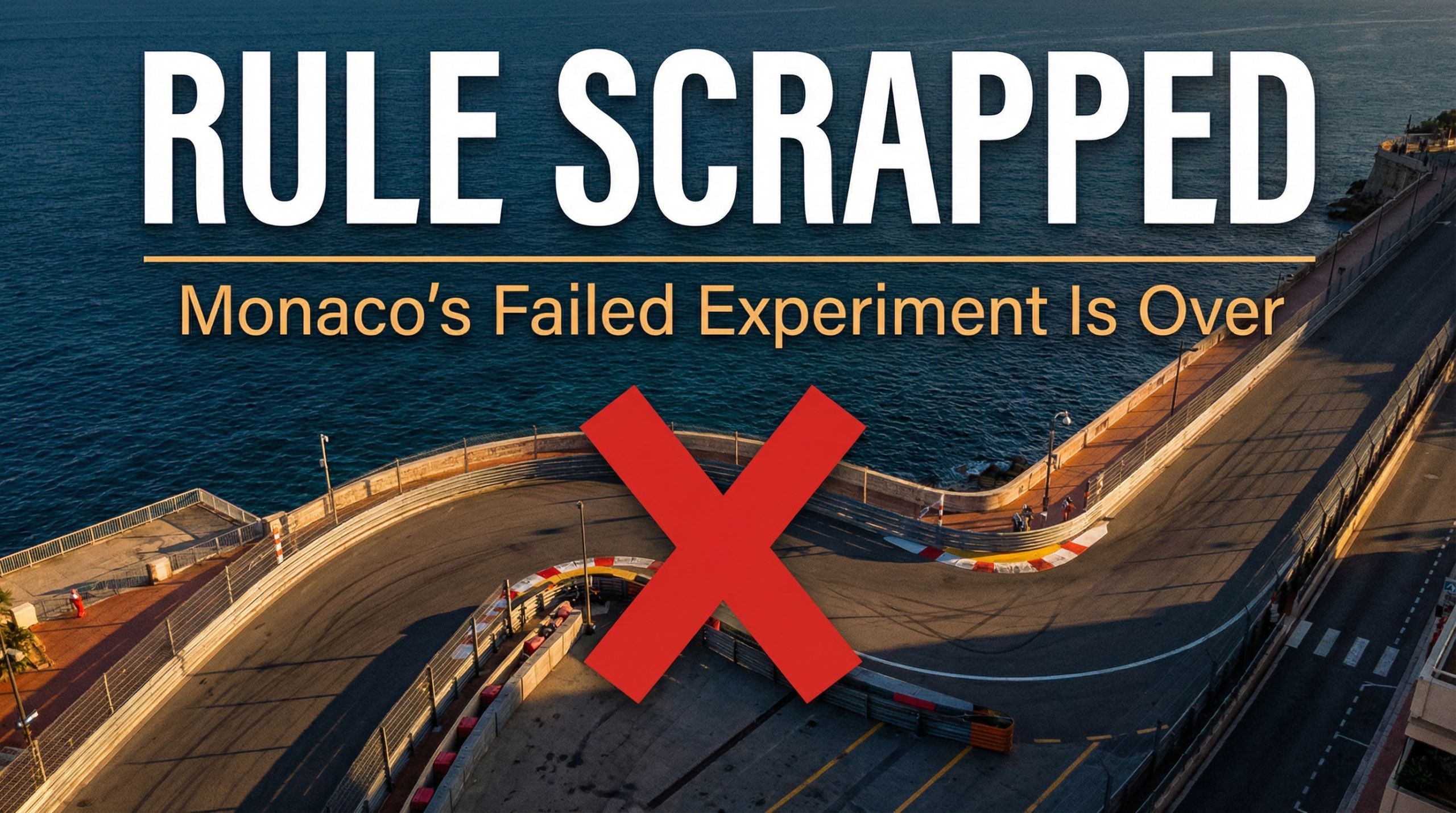
The Monaco two-stop rule is dead. The FIA confirmed its removal from the 2026 sporting regulations just days before the season opener in Melbourne. The mandatory three-tyre-set experiment that crushed the 2025 Monaco Grand Prix will not return. The governing body finally accepted what the entire paddock already knew. The rule failed spectacularly.
The original thinking was straightforward. Monaco’s streets make overtaking nearly impossible. Forcing two pit stops should have created more position changes and more entertainment. In reality, teams exposed the rule instantly. Consequently, strategic manipulation replaced genuine racing. The experiment backfired from the very first lap.
Racing Bulls deployed Liam Lawson as a rolling roadblock. He ran over four seconds per lap slower than his car could manage. That deliberate pace manipulation secured a top-six finish for teammate Isack Hadjar. Meanwhile, Max Verstappen delayed his second stop so aggressively that Lando Norris accused him of backing him into Charles Leclerc deliberately.
The entire 78-lap race produced just one legal overtake on track. The Monaco two-stop rule did not create excitement. It triggered frustration across the entire grid. Driver criticism landed hard and fast. Carlos Sainz called the tactics “race manipulation.” He described drivers running “two or three seconds off the pace that the car can do.”
Furthermore, even teams that benefited turned against the system. Williams boss James Vowles admitted the loophole left him “the most uncomfortable I’ve felt.” He preferred “fighting for points on merit rather than having to game the system.” Consequently, when a team principal who exploited the rule publicly condemns it, the FIA loses all ground to defend it.
The FIA initially kept the rule inside the draft 2026 regulations after a summer e-vote. However, FIA single-seater director Nikolas Tombazis later admitted the deeper truth. “Clearly there is a track issue, meaning that overtaking is almost impossible. That is the root cause of these issues, not whether there are one or two stops.” Following further discussions, the plan was abandoned altogether.
The Monaco rule was not the only update ratified by the FIA World Motor Sport Council. Q3 now runs for 13 minutes instead of 12. That extra minute accounts for the complexity of managing active aerodynamics and energy deployment in the new 2026 cars. Additionally, Cadillac’s arrival as the eleventh team expands the grid to 22 cars.
Consequently, the FIA adjusted the Q1 and Q2 elimination line. Six drivers now drop out after each session instead of five. Q3 remains a 10-car shootout. The FIA also reversed its plan to make cooling vests mandatory for drivers. They remain optional after significant pushback from the grid. These changes landed quietly alongside the headline Monaco decision.
Monaco itself moves to June 5 through 7 after a calendar swap with Canada. The 2026 cars are narrower, lighter and shorter. Active aerodynamics and Overtake Mode replace the old DRS. However, Sauber boss Mattia Binotto tempered expectations. He warned that guaranteeing “Monaco will be the race with the most overtakes is unlikely.”
Scrapping the Monaco two-stop rule was the right call. But the rule was always a band-aid over a deeper wound. The streets remain narrow. The racing remains processional. Until Formula 1 solves that fundamental problem, no regulation tweak will fix what Monaco’s walls refuse to allow. The experiment is over. The real challenge has barely started.