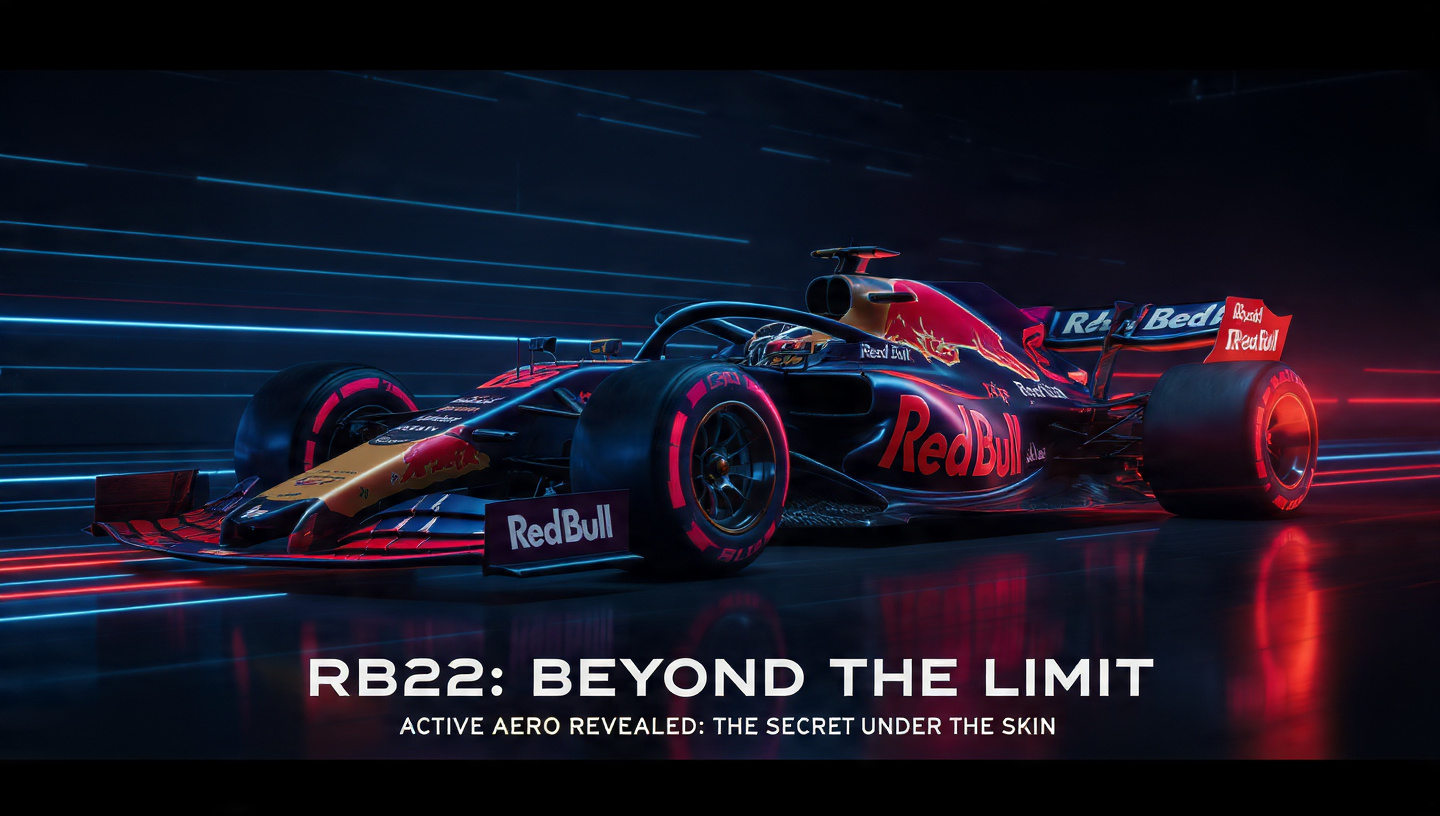
Red Bull has pulled back the curtain on their 2026 Formula 1 challenger, revealing a dramatically different machine built for revolutionary new regulations that will transform how F1 cars look, sound, and race—here’s everything you need to know about the RB22.
Formula 1 is about to change more dramatically than at any point since the turbo-hybrid era began in 2014. The 2026 regulations represent a complete reset, and Red Bull’s newly revealed RB22 concept gives us our first proper glimpse at how the dominant force of recent seasons plans to tackle this brave new world.
But this isn’t just about new bodywork and tweaked aerodynamics. The Red Bull 2026 car arrives alongside a brand-new power unit partnership, significant technical philosophy shifts, and questions about whether the team that dominated 2022-2024 can maintain supremacy when the rulebook gets torn up entirely.
The 2026 Regulations: Why Everything Had to Change
Before examining the RB22 itself, understanding why these regulations exist explains the dramatic differences you’re seeing.
The FIA developed the 2026 technical regulations with several core objectives. The goal was tighter, wheel-to-wheel racing achieved by reducing aerodynamic dependency. A stronger emphasis was placed on increased electrical power from hybrid systems to meet manufacturers’ sustainability targets. At the same time, the vision centered on smaller, lighter, more agile cars capable of truly following and battling through corners.
The result is perhaps the most comprehensive regulation change in modern F1 history. Cars will feature significantly reduced downforce generated through dramatically different aerodynamic philosophies. The power units will produce roughly equal power from internal combustion engines and electrical motors—a massive shift from current ratios.
Active aerodynamics return to Formula 1 for the first time in decades. Cars will feature moveable front and rear wing elements that adjust automatically based on speed, reducing drag on straights while maintaining downforce in corners. This isn’t simple DRS—it’s a fundamental reimagining of how F1 cars manage airflow.
Red Bull’s RB22 represents their interpretation of these complex rules, showing just how radically different 2026 machinery will look.
First Impressions: How the RB22 Looks Completely Different
The moment Red Bull unveiled their 2026 concept, the visual transformation was immediately apparent. This doesn’t look like any Red Bull we’ve seen during their dominant era.
The most striking change appears at the front. The RB22 features dramatically narrower front wing elements compared to current machinery, reflecting regulations that significantly reduce front-end aerodynamic complexity. Gone are intricate multi-element wings with countless small flaps. The 2026 front wings appear cleaner, simpler, and fundamentally different.
Moving rearward, the sidepod design has evolved substantially. Red Bull’s controversial 2022-era “zero-pod” approach has given way to new requirements dictated by cooling needs for the revised power unit. The RB22 shows smoother bodywork integration suggesting priorities have shifted from pure downforce toward drag reduction.
The rear wing tells perhaps the most interesting story. Active aerodynamic elements are clearly visible, designed to open and close based on racing conditions. When open, these elements reduce drag substantially on straights. When closed, they provide downforce for cornering. The system operates automatically based on speed rather than requiring driver activation.
Overall dimensions have changed too. The 2026 cars will be shorter and lighter than current machinery, addressing complaints about F1 cars becoming unwieldy behemoths. The RB22 appears more compact and aggressive, hinting at improved agility.
The Ford Partnership: Red Bull’s New Power Unit Era
Perhaps the most significant story behind the RB22 isn’t visible—it’s what powers the machine. After years with Honda, Red Bull enters 2026 with a partnership that fundamentally changes their operation.
Red Bull Ford Powertrains represents the team’s ambitious gamble to become a true constructor. Ford’s involvement brings significant investment and electrical system expertise, though their role focuses primarily on branding rather than complete engine development.
The new power unit follows 2026 regulations demanding dramatic changes:
- Electrical power increases massively, with the MGU-K producing approximately 350 kW compared to today’s 120 kW, making electric power roughly equal to combustion output.
- The MGU-H disappears entirely, eliminating the complex heat energy recovery system that current manufacturers have mastered.
- Sustainable fuels become mandatory, with all power units required to run on 100% sustainable fuel.
- Cost caps apply to power unit development, theoretically leveling the playing field between established manufacturers and newer entrants.
- Simplified internal combustion engines aim to reduce astronomical development costs that previously prevented new manufacturer involvement.
For Red Bull, producing a competitive power unit from scratch represents enormous risk. They’ve recruited extensively from Mercedes’ High Performance Powertrains division, but starting fresh against established manufacturers remains daunting. The real test comes when laptimes reveal competitive reality.
Adrian Newey’s Shadow: Can Red Bull Maintain Design Excellence?
The elephant in the room involves someone absent from the RB22 reveal. Adrian Newey, the legendary aerodynamicist responsible for designing Red Bull’s championship-winning cars, departed the team in 2024.
Newey’s influence cannot be overstated. His innovative thinking produced the RB19—widely considered the most dominant F1 car ever created. His understanding of aerodynamic philosophy gave Red Bull advantages others struggled to replicate.
The 2026 regulations present exactly the clean-sheet challenge where Newey historically excelled. Major regulation changes reward innovative thinking—areas where his genius consistently shined. His absence during Red Bull’s most important design project since 2014 concerns many observers.
Red Bull insists their technical department remains world-class. Chief Technical Officer Pierre Waché leads the RB22 project, supported by experienced engineers who worked alongside Newey for years. The team argues their processes and culture transcend any individual.
However, Newey joining Aston Martin for 2026 adds intrigue. His fresh perspective on identical regulations could produce a rival challenging Red Bull’s presumed superiority. For the first time in years, Red Bull faces major change without their greatest technical weapon.
What This Means for Max Verstappen’s Future
Behind every technical discussion sits a simple question: can Max Verstappen keep winning with this machinery and is it as fast as max?
Verstappen’s commitment through 2028 ties his future to the RB22 project’s success. After dominating 2022-2024 with equipment superiority, he faces genuine uncertainty about whether his 2026 car maintains that advantage.
The optimistic view suggests Verstappen’s extraordinary talent shines regardless of position. His wet-weather masterclasses, racecraft, and ability to extract maximum performance could prove valuable if Red Bull produces merely competitive rather than dominant equipment.
The pessimistic perspective notes that even the greatest drivers need competitive cars. If Red Bull’s power unit struggles or aerodynamic concepts miss without Newey’s guidance, Verstappen could face midfield battles rather than trophy collection.
Meanwhile, competitors have genuine optimism. Mercedes brings established power unit excellence. Ferrari maintains extensive resources. Aston Martin’s Newey signing, combined with Honda partnership, suggests serious championship contention. McLaren’s recent resurgence demonstrates growing capability.
The 2026 grid could prove far more competitive than recent seasons where Red Bull superiority felt predetermined.
Promising Signs with Genuine Questions
Red Bull’s 2026 reveal delivers exactly what fans hoped for: our first concrete look at how revolutionary regulations translate to actual machinery. The RB22 appears aggressive, modern, and thoughtfully designed for completely different technical priorities.
Yet questions reasonably persist. The new power unit represents Red Bull’s biggest technical gamble in decades. Adrian Newey’s absence removes their greatest design asset during their most important development period. Competitors have legitimate reasons for closing the gap.
What we’ve seen suggests Red Bull is taking 2026 seriously with resources their aspirations require. Whether that translates to continued dominance, competitive racing, or unexpected struggles remains Formula 1’s most compelling storyline heading into a transformative era.
The RB22 exists. It looks spectacular. Now begins the real work of making it fast enough to keep Max Verstappen winning championships.
Frequently Asked Questions
- When will the Red Bull RB22 actually race?
The RB22 will make its competitive debut at the first race of the 2026 season (expected late Feb / early March 2026). Pre-season testing is mid-February.
- Is Red Bull still using Honda engines in 2026?
No. Red Bull switches to their own Red Bull Ford Powertrains unit developed in-house with Ford partnership.
- Did Adrian Newey design the 2026 Red Bull car?
No. Newey left Red Bull in 2024. The RB22 is led by Pierre Waché and the current technical team.
- What are the biggest changes for 2026 F1 cars?
50/50 ICE-electric power split, active front + rear wings, no MGU-H, smaller/lighter cars, 100% sustainable fuel.
- Will the 2026 cars have movable wings / active aero?
Yes. Full active aerodynamics on front and rear wings (not just DRS) that open/close automatically.


2 Comments