
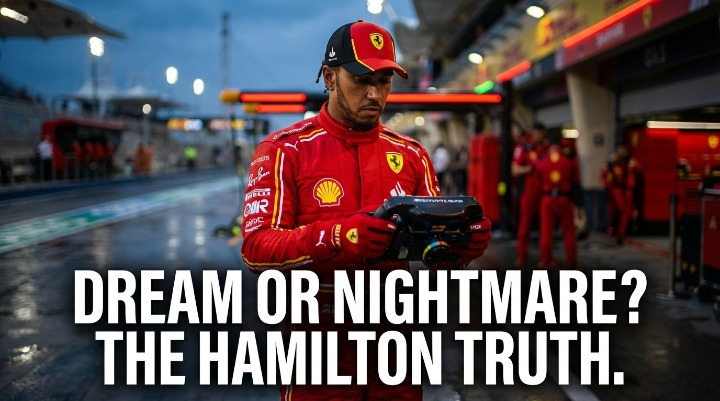
Lewis Hamilton’s debut was a disaster. Discover the truth behind the Hamilton Ferrari nightmare and why the 2026 season is his final shot at redemption.
When Lewis Hamilton signed with Ferrari for 2025, fans lost their minds. This was Hamilton in red, the dream partnership. When the seven-time world champion first stood beside the iconic Ferrari F40 outside Enzo Ferrari’s historic home, that picture blew Instagram like Thomas Shelby but in formula 1. Expectations were high because of the partnership that about to start between a champion and F1’s most famous team. Yet as the season unfolded, the hopes got down and we witnessed a disaster.
On-Track Realities Fall Short of Expectations
Let’s talk stats. Hamilton’s first Ferrari season didn’t end well as per his and everyone else’s expectations. In 24 races, zero podiums. He finished P6 with 156 points.
Ferrari got seven podiums total, mostly thanks to Leclerc. Nobody expected Lewis getting this behind.
On weekends before actual race the practice round and qualifying were happening, Hamilton looked decent. But that was rare. He won one sprint race and then that was about it. The rest of the year? Inconsistent mess. That left both driver and whole team disappointed and frustrated at the end of the every race. Hamilton’s switch reshaped the entire 2026 F1 driver lineup and forced multiple teams to restructure their plans.
The Mess Behind the Scenes
Hamilton took the unusual step Hamilton started writing technical reports for Ferrari’s engineers. This proactive involvement, intended to help address structural and technical weaknesses, became a flashpoint in the wider narrative of his season.
Former Ferrari team principal Maurizio Arrivabene dismissed these “dossiers” with a sharp comparison to Sebastian Vettel’s similar past efforts, Arrivabene’s critique was not simply about content but philosophy. He argued that when a driver ventures too far into engineering territory, it can blur the line between actionable feedback and counterproductive noise. We can’t figure it out that was Hamilton trying too hard, or was Ferrari just not listening?
Teammate Dynamics and Competitive Disparities
Leclerc frequently outpaced Hamilton, faster in qualifying, better in races, turning Ferrari’s limited potential into actual results while Hamilton spun his wheels. Although Hamilton matched the best result of the season with a fourth-place finish at the Austrian Grand Prix, these occasions were increasingly overshadowed by Leclerc’s consistency and Ferrari’s broader struggles.
This internal dynamic was amplified by the narrative surrounding Ferrari’s operational execution. Pit-stop decisions, tyre strategies, and adaptive race management were repeatedly identified by insiders and analysts as areas where the team struggled to react effectively under pressure — a factor that did not serve Hamilton’s strengths as a driver who excels under flowing conditions and strategic clarity.
Breaking Point
For Hamilton himself, the emotional toll was evident. At the season finale, he spoke candidly about the physical and psychological weight of a campaign where frustration often outpaced satisfaction. The Briton admitted that the year had been one of the toughest of his career, and that he planned to use the off-season to truly disconnect and recalibrate, even going so far as to say he would “unplug from the matrix” by abandoning his phone during the winter break.
Where Ferrari Failed Hamilton
Ferrari’s mistakes weren’t just about pace—they were operational disasters. At the British Grand Prix, their GPS system failed, forcing blind strategy calls without knowing Hamilton’s position. At Spa, he was under-fueled and spent the race coasting to save fuel. Qatar showed chaotic pit stops with mechanics unprepared as Hamilton approached.
Weather strategy was particularly painful. In Australia, Hamilton asked if it was raining on track. Ferrari said no. It was raining. They consistently missed obvious pit windows when conditions changed.
Communication with race engineer Riccardo Adami broke down repeatedly—Hamilton wanted less chatter but then missed critical information when he needed it.
These weren’t one-off mistakes. Week after week, Ferrari’s strategy calls and pit execution failed Hamilton when it mattered most. The decision to choose Hamilton over Sainz remains the foundational question behind every struggle Ferrari now faces.
Lessons Learned and the Road Ahead
As Formula 1 steps into 2026 season, Ferrari and Hamilton must reflect on what 2025 revealed about themselves. For Hamilton, For Hamilton, this year has been tough. For Ferrari, it taught them exactly what doesn’t work. Now they need to prove they learned something.
Can Hamilton adapt to Ferrari’s dysfunction? Can Ferrari handle having a GOAT-level driver pushing them? The potential’s there, but potential doesn’t win races.
The dream partnership isn’t dead yet. As fans, we’re still hopeful—he’s a seven-time world champion for a reason, after all. We’re eager to see Hamilton back on the podium in 2026. As one Hamilton fan said, “Don’t forget who you are.”


1 Comment