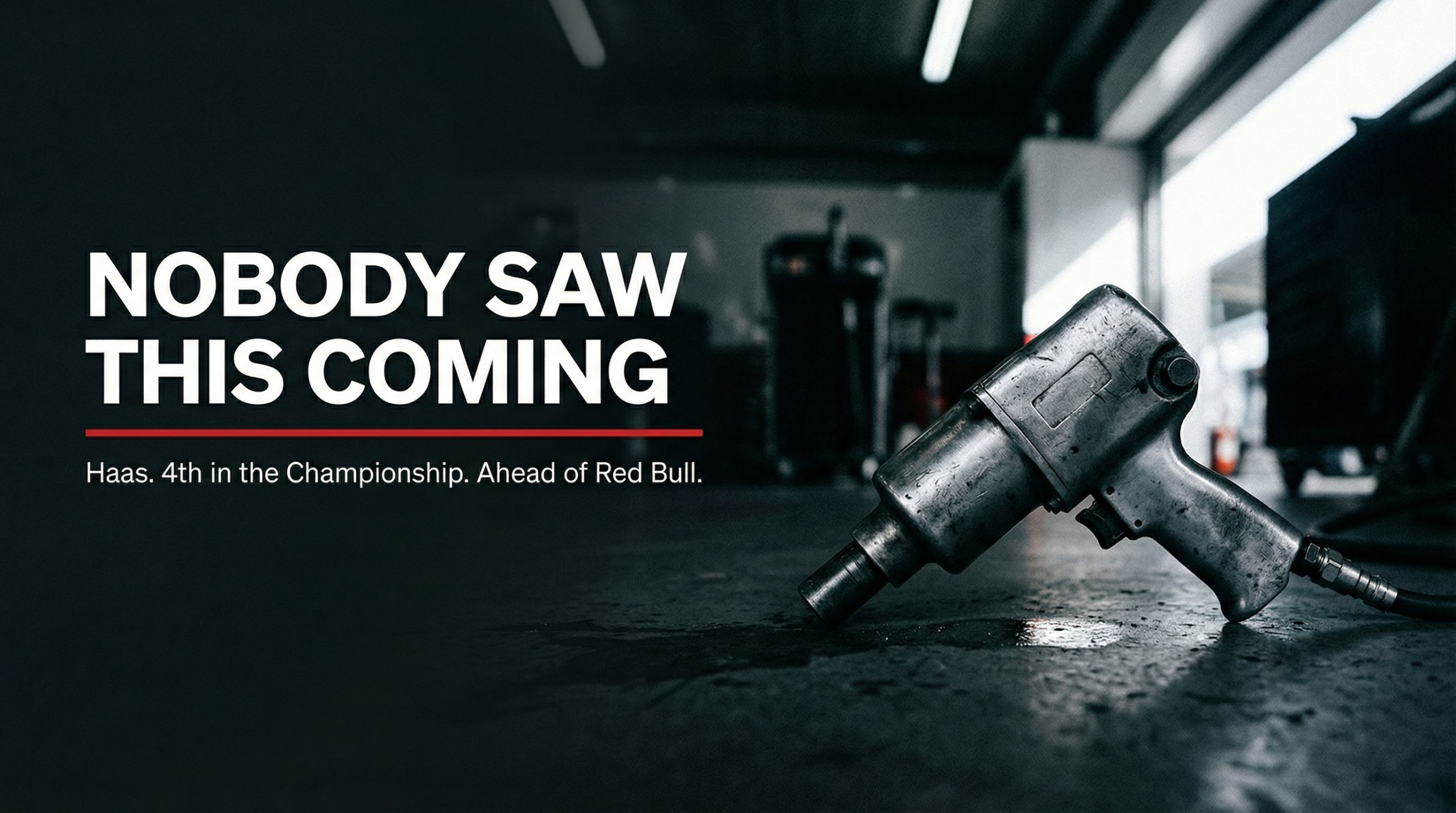
Nobody predicted this. Before the 2026 season started, every paddock conversation centred on Mercedes, Ferrari, Red Bull and McLaren. The traditional order. The established hierarchy. Nobody mentioned Haas F1 2026 as a team that would sit fourth in the constructors championship after two races, ahead of McLaren and Red Bull, with a driver fighting in the top five of the drivers standings. Yet that is exactly where the sport finds itself. Oliver Bearman has become the story nobody saw coming, and the reasons behind it go much deeper than luck.
The Numbers That Shocked the Entire Paddock
Bearman finished seventh in Australia and fifth in China. He also scored a point in the Chinese sprint race. Furthermore, every single one of Haas’s 17 championship points came from Bearman alone. Teammate Esteban Ocon has had a painful start, caught up in racing incidents and pit stop issues that stripped away potential results. Moreover, Haas currently sit fourth in the constructors championship, a position that felt impossible to even discuss during pre-season testing when the narrative was built entirely around the gap between the top four and everyone else.
Komatsu summed it up simply after China. “We beat Red Bull on merit today,” the Haas team principal told Autosport. “We were the fourth fastest team.” Those are not the words of a team riding their luck.
Why the 2026 Regulations Suit Haas Perfectly
The 2026 regulations reward corner speed above almost everything else. Teams that built their cars around aerodynamic precision through technical sections gained an immediate advantage over those relying on straight-line power. Consequently, Haas arrived in 2026 with a chassis that mirrors Ferrari’s core philosophy. Both teams use the Ferrari power unit, and both have focused their development on cornering performance as the weapon to close the gap to Mercedes on the straights.
The parallels with Ferrari are striking and deliberate. Additionally, Haas moved quickly to adopt Ferrari’s exhaust blown flap arrangement at the Chinese Grand Prix, introducing their own version of the rotating rear wing concept that Ferrari had debuted earlier in the season. That kind of rapid technical response demonstrates a team operating at a level far beyond their traditional midfield status.
Bearman Is Doing Things Verstappen Could Not
The most compelling moment of the Chinese Grand Prix came mid-race. Verstappen, the four-time world champion in a Red Bull that cost hundreds of millions to develop, spent several laps stuck 2.5 seconds behind Bearman and could not find a way past. Meanwhile, Bearman managed his tyres brilliantly through graining conditions, controlled traffic, and maintained the gap until Verstappen’s retirement handed the position away naturally. That sequence told the story of 2026 more clearly than any championship table.
Bearman himself described the race balance as a great baseline. “I think we’re quicker in race trim at the moment,” he stated after China. Qualifying remains the weakness, but on Sundays, the VF-26 consistently delivers pace that rivals cars from teams with far greater resources.
This Is Not the First Time Haas Has Done This
However, history carries a warning. In 2022, Haas produced exactly the same kind of stunning start to a new regulation era. Kevin Magnussen returned to the team and immediately scored points. The car looked genuinely competitive in the opening races. Then the development curve bit hard. Haas lacked the resources to keep pace with teams like Ferrari and Mercedes as the season evolved, and the promise of those early rounds faded significantly before summer.
Nevertheless, the 2026 version of Haas is a different organisation. In recent seasons the team steadily increased both their resource base and technical personnel. The level of updates introduced throughout 2025 allowed them to remain competitive into the final races of the season. Bearman’s fourth place finish at Mexico City late in 2025 was not a fluke. It was evidence of a development trajectory that has continued into the new season.
The Bearman and Ferrari Question Nobody Will Stop Asking
Bearman is a Ferrari junior driver racing in a Ferrari-powered car for a Ferrari customer team. Every strong result tightens the link between the 20-year-old and a potential future at the Scuderia. Sky Sports commentator David Croft raised the possibility openly during the Chinese GP weekend, and former driver Anthony Davidson offered strong support. Furthermore, Bearman addressed the speculation directly on the Back at Base podcast, confirming his focus stays entirely on Haas while acknowledging that his future depends on delivering results consistently.
That creates a fascinating dynamic. Every time Bearman outperforms expectations, he strengthens both Haas and his personal case for a Ferrari seat. The team’s success and his individual ambition are currently pointing in exactly the same direction.
Can Haas Sustain This Through a Full Season
Suzuka arrives as the first genuine test of whether the Haas F1 2026 performance holds across different circuit types. Japan’s high-speed corners and technical Esses section suits the same chassis philosophy that has served Haas so well in Melbourne and Shanghai. Consequently, if Bearman scores points again at Suzuka, the conversation shifts from surprise story to genuine championship contender for fourth in the constructors standings.
The ceiling question remains. Komatsu himself acknowledged that Haas cannot yet beat the top three teams in normal conditions. Mercedes and Ferrari operate at a level that requires either a major technical leap or significant rival failures to bridge. However, fourth in the constructors championship represents a genuinely transformative result for an organisation that has spent years fighting in the lower midfield. If Haas maintains this level, the financial rewards from a strong constructors finish would accelerate their development programme significantly heading into 2027.
The Midfield Has a New Leader and Nobody Expected It
The 2026 season was supposed to shake up the established order among the top four. Nobody anticipated the shakeup would benefit Haas F1 2026 most dramatically of all. Bearman is scoring points in every session he completes. The car suits the regulations better than most rivals predicted. The team is copying Ferrari’s technical innovations faster than anyone expected. Moreover, with McLaren in reliability crisis and Red Bull struggling for basic driveability, the gap Haas needed to exploit arrived earlier and wider than anyone in the paddock had planned for. The surprise of 2026 is not who is winning. It is who is quietly building something much more significant than a flash of early-season form.