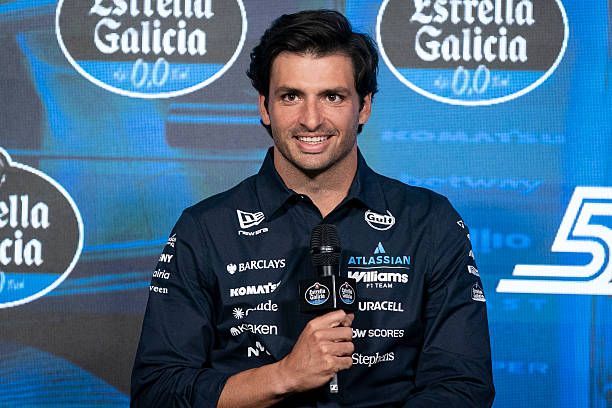
Testing is over. The teams have packed up and left Bahrain. And instead of calm confidence heading into the new season, Formula 1 has a problem on its hands. Carlos Sainz, Williams driver and one of the most respected voices in the paddock, has publicly told the FIA and FOM that the F1 2026 energy rules may need fixing. Melbourne is nine days away.
What Went Wrong in Bahrain
Here is the thing about Bahrain. The circuit accidentally made the new rules look fine. It has long, heavy braking zones where drivers slow down hard from high speed. That braking action recharges the car’s battery naturally. So throughout testing, the cars gathered enough electrical energy to get around without too much trouble. Teams left feeling cautiously positive.
The problem is that most circuits on the 2026 calendar are nothing like Bahrain.
Consequently, what looked manageable in the desert does not hold up once you start looking at places like Melbourne, Jeddah, or Suzuka. Those tracks do not give drivers the same chance to recharge the battery. And that is exactly where the new rules start to fall apart.
So What Are These Rules Actually Asking Drivers to Do
Think of it like a phone battery. The new 2026 cars split their power almost equally between a petrol engine and an electric motor. The electric motor is seriously powerful — it pumps out 350 kilowatts, which is a huge jump from what the cars used before. But that electric power only works if the battery stays charged. Crucially, if the battery runs low mid-lap, the driver has to back off the throttle to let it recharge. On a racing circuit, backing off costs serious time.
At Bahrain, the braking zones did most of the recharging work automatically. At Melbourne, there are barely any heavy braking zones. So drivers will have to slow down deliberately just to keep the battery alive. That is not racing. That is energy management theatre.
Why Sainz Speaking Up Actually Matters
Sainz is not just any driver making noise after a difficult test. He runs the Grand Prix Drivers’ Association, which means when he speaks publicly about a rules problem, the whole paddock is effectively standing behind him. He told media in Bahrain that the FIA and FOM need to stay open-minded about adjusting the F1 2026 energy rules if the early races expose real issues.
“We should stay flexible rather than committed to a certain level of energy management,” Carlos Sainz.
That is a calm, polite sentence. But coming from the GPDA director, days before round one, it lands like a warning shot.
The Tracks That Are About to Cause Chaos
- Melbourne runs fast and flat with almost no heavy braking. Drivers will struggle to keep the battery charged without slowing down deliberately on the straights, which destroys lap time and makes passing harder.
- Jeddah is a high-speed street circuit with long, flowing corners and very few places to brake hard. The battery will drain quickly and recharge slowly, creating the same headache.
- Suzuka has fast, sweeping bends that do not offer much braking energy either. Engineers have already flagged it internally as a circuit that will test the rules hard.
- Bahrain, by contrast, was the perfect test venue for a regulation set that was not ready to be tested anywhere else. That is the uncomfortable truth from three days of running.
The FIA Has a Backup Plan — But It Is Complicated
Meanwhile, it emerged that the FIA has quietly held a fallback option for over a year. The idea is to reduce the electric motor’s peak output from 350 kilowatts down to somewhere around 200 or 250 kilowatts during races. Less power available at any one moment, but drivers can use it for longer stretches of the lap without draining the battery dry.
It sounds sensible. However, it creates an awkward situation. The entire point of the 2026 rules was to make electric power equal to the petrol engine. Turning the electric output down to make the racing work is quietly admitting the original target was too aggressive. McLaren, for their part, pushed a different fix entirely, demonstrating a technique that harvests energy under full throttle rather than forcing drivers to lift and coast. The FIA was briefed. A decision is still pending.
Nine Days to Figure This Out
The Australian Grand Prix starts on 6 March. That is not much time. Sainz’s warning over the F1 2026 energy rules is not a complaint. It is a practical signal from the drivers telling the people in charge to keep their eyes open and stay ready to act. If the governing bodies treat early-race evidence as a problem to ignore rather than a problem to solve, the frustration building across the paddock will boil over fast.
F1’s biggest rules overhaul in years deserves a strong start. Right now, that is genuinely not guaranteed.