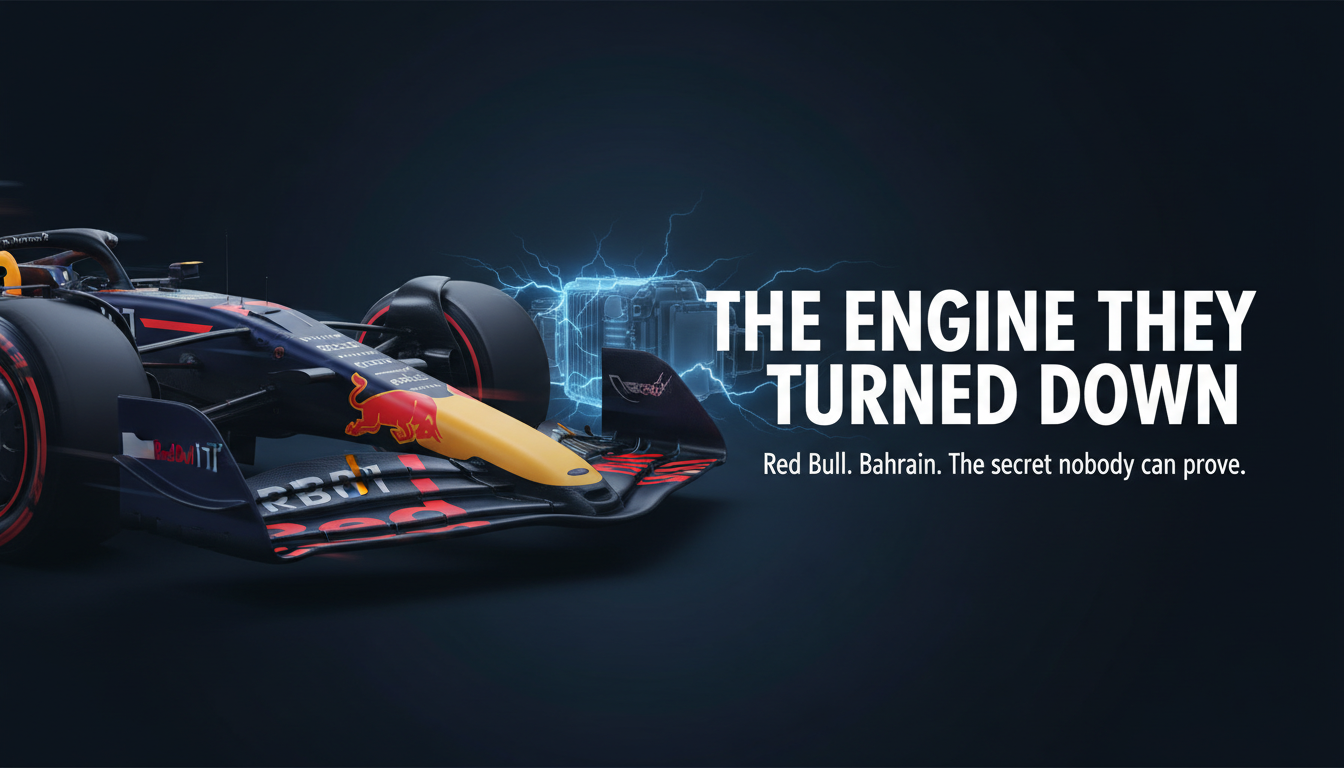
The whispers started on Day One in Bahrain. By the final session, they’d detonated into something far more consequential. The Red Bull energy deployment advantage, witnessed on the straights in real time, confirmed by GPS data, and flagged by Toto Wolff himself, suddenly went quiet. Not because it disappeared. But because Red Bull chose to make it disappear.
Williams boss James Vowles, watching from the pitwall, connected the dots immediately. “Red Bull looked really good until we spoke about their power unit,” he told F1TV. “Then they’ve turned it down quite a bit since then.” This could define the entire 2026 season before a single wheel turns in anger at Melbourne.
The Numbers That Shocked Everyone
Toto Wolff doesn’t scare easily. He’s built empires out of engine eras. So when Mercedes’ own team principal pointed at Red Bull and declared them the “benchmark” on the first official day of Bahrain testing, the paddock stopped and listened. His specific observation? The Red Bull-Ford DM01 power unit deployed far more electrical energy down the straights than any rival. Meanwhile, Carlos Sainz, now lining up for Williams in 2026, studied the GPS traces and reached the same conclusion. He called it “a clear step ahead.”
Crucially, the new 2026 regulations have tripled the electrical deployment capability compared to the previous generation. The MGU-K now delivers up to 350kW, roughly equivalent to the combustion engine output itself. Consequently, managing that energy over a lap has become the defining art form. And Red Bull appear to have mastered it before anyone else.
George Russell called what he saw in Bahrain “pretty scary.”
Vowles Pulled the Curtain Back
Here’s where the story shifts from impressive to suspicious. According to Vowles, the moment rival camps started publicly praising the Red Bull-Ford power unit, Red Bull visibly dialled things back. Verstappen still finished in the top three on the final two days. But the eye-catching raw deployment numbers that had stunned the paddock on Day One? Gone.
Deliberately muted. Red Bull essentially buried their headline performance data to avoid triggering a technical directive from the FIA before Melbourne. This is high-stakes, pre-season poker. Milton Keynes is holding cards nobody else can see.
Moreover, this strategy isn’t without precedent. Teams have sandbagged during testing for decades. But sandbagging a genuinely transformative Red Bull energy deployment advantage, one that rivals confirmed through objective GPS telemetry, is a different animal entirely.
The Loophole Nobody Mentions
Both Red Bull-Ford and Mercedes are alleged to have exploited a loophole in the 2026 compression ratio rules. The regulations reduced the maximum compression ratio from 18:1 to 16:1, measured at ambient temperature in static conditions. What Mercedes and Red Bull reportedly achieved is compliance during cold FIA checks, while their engines operate at a higher ratio when fully up to temperature on-circuit.
- Ferrari, Honda, and Audi raised this furiously in secret letters and meetings with the FIA dating back to late 2025, according to multiple sources inside the paddock.
- An extraordinary session bringing together all five power unit manufacturers took place, but ended without resolution and without a binding ruling.
- The FIA’s Nikolas Tombazis insisted the matter would be resolved before Australia, but Motorsport.com sources confirmed it will not be closed before the season begins.
- The engines were homologated on March 1, meaning whatever advantage exists is now locked in until 2027 at the earliest.
- Ferrari, Honda, and Audi have signalled they retain the right to file a formal protest at the Australian Grand Prix itself.
The entire new era of Formula 1 will therefore launch in Melbourne wrapped in legal and technical controversy. That is not a footnote. That is the story.
Ferrari’s Speed Means Less Than You Think
Ferrari looked genuinely rapid in Bahrain. Their SF-26 posted strong lap times and their engineers left the circuit quietly confident. Vowles himself acknowledged their pace, noting “Ferrari, well done to them, really.” Yet the Ferrari numbers must be contextualised against what Red Bull demonstrated and then deliberately hid. Furthermore, Ferrari don’t carry the compression ratio controversy.
They are among the loudest voices demanding the FIA act against it. So while the Scuderia may genuinely be the fastest car on the data visible to the paddock, they may well be racing against a power unit from Milton Keynes that still has performance in reserve.
Meanwhile, Verstappen, a five-time world champion entering 2026, ran conservative programmes throughout the final days. His times were still fast enough to raise eyebrows. Imagine what he hasn’t shown.
Melbourne Just Got Very Complicated
The Australian Grand Prix, scheduled for March 6, now arrives under extraordinary circumstances. The FIA has publicly committed to clarity before the opening round, but that clarity has already proven elusive. Ferrari, Honda, and Audi each retain the option to protest on race weekend itself.
James Vowles said something significant. He warned that games are being played with fuel loads, power unit maps, and run plans right across the top four. Nobody showed their full hand. But Red Bull showed enough on Day One to confirm the advantage and then snatched it back before anyone could scream too loudly. That is not testing strategy. That is pre-emptive legal protection. And it tells you everything about what Red Bull believe they actually have in that DM01.