Something strange appears on screen during almost every 2026 F1 race. A car charges onto a long straight at full throttle. The driver then backs off mid-acceleration with no corner approaching. Nothing looks wrong. That moment is super clipping in F1, and it is reshaping how every race this season gets won and lost.
What Is Super Clipping in F1
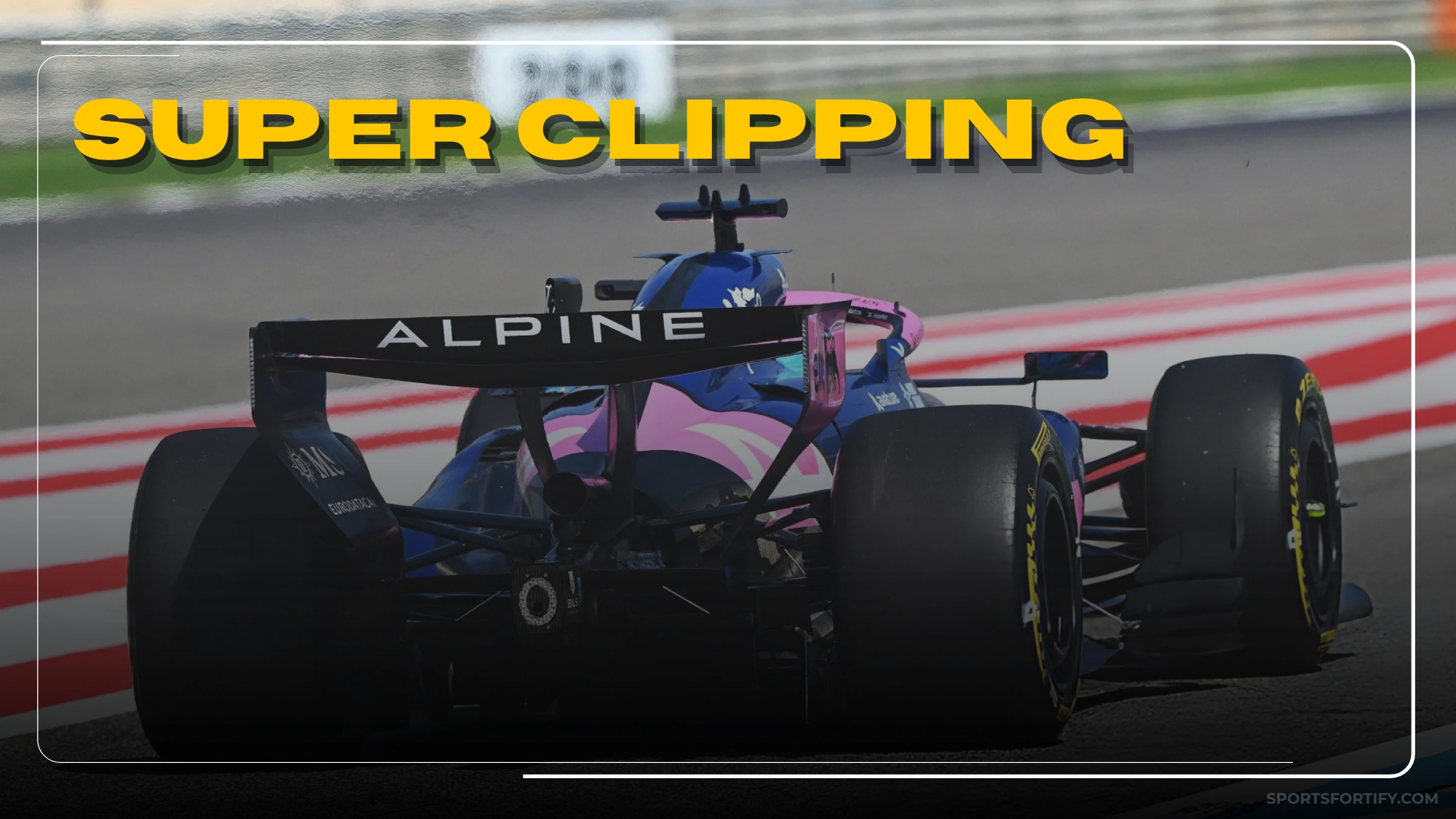
Super clipping in F1 occurs when a car burns through its electrical energy budget before the braking zone arrives. The power unit hits its deployment limit mid-straight. Either the driver deliberately lifts, or the car stops accelerating at full throttle entirely. The term describes the power curve being clipped at its peak too early.
The 2026 regulations made this problem structural rather than accidental. With electrical power now half of total output, any deployment cap creates a ceiling that drivers reach at full speed. That ceiling cannot be avoided through skill alone. Teams can only manage how and when the car hits it, not whether it does.
Why Does Super Clipping Happen in F1 2026
The 2026 regulations introduced a completely new power unit structure. For the first time in F1 history, electrical power now contributes roughly fifty percent of total output. The combustion engine and electrical motor share the workload equally. However, the electrical side runs on a strictly limited energy budget per lap.
The new cars also recover energy differently from earlier generations. Earlier cars relied on braking to recharge and used DRS to gain straight-line performance on circuits. These cars instead harvest energy from exhaust gases through the Motor Generator Unit Heat system. However, recovery rates do not always match deployment rates across all circuits.
Circuits with long straights and short corners make the problem considerably worse. The car depletes its budget heavily on straights but has little corner time to recover. As a result, the energy runs out before the straight ends on almost every lap. That is when super clipping becomes visible on the broadcast.
How Super Clipping Affects the Race You Are Watching
Super clipping in F1 directly affects lap times, overtaking windows, and race strategy. A car that clips early on a straight loses real time to any car still at full power. Furthermore, those fractions compound over fifty laps into race-deciding gaps. That is partly why Mercedes built such a commanding lead in the opening rounds of 2026.
When Verstappen visibly backed off mid-straight in Australia and China, many viewers assumed tyre management or a team instruction. Neither was true. His Red Bull was clipping so severely that the car could not sustain full power through the entire straight. Understanding that single fact changes the whole narrative of those early 2026 races.
Consequently, super clipping also shapes overtaking directly. A driver approaching from behind needs full power when the gap opens on a straight. If that driver is already clipping, the window closes before they can commit. Meanwhile, the car ahead can defend simply by managing energy better than its rival on that lap.
What Is Energy Management in F1
Super clipping is the symptom. Energy management is the skill that controls it. Every driver manages their electrical budget lap by lap. They decide how aggressively to spend on each straight and when to recover carefully in corners. Hamilton described 2026 as a different driving discipline from any previous F1 car.
Modern F1 drivers are not racing wheel to wheel alone. They simultaneously manage a live energy economy at three hundred kilometres per hour. The pit wall and driver work through these decisions together in real time. That invisible conversation shapes race outcomes as much as anything visible on track.
Additionally, events like a Virtual Safety Car period become critical strategic moments. Teams use the enforced slow lap to rebuild energy budgets without losing ground to rivals. Therefore, a well-timed VSC can completely transform a team’s clipping situation heading into a key phase of the race.
Why Some F1 Teams Handle Super Clipping Better Than Others
Not every team suffers equally. Mercedes optimised their energy deployment more effectively than rivals entering 2026. Their cars clip later on straights, holding full power longer before the budget runs out. Consequently, they gain time on every straight of every race, and that advantage compounds across the full race distance.
Ferrari manage the problem reasonably well at technical circuits with tight corner sections that allow strong energy recovery. Red Bull have struggled considerably more, and Verstappen’s radio messages in China about driveability reflected exactly that. The circuit layout plays a massive role in how severely any team is exposed to the problem on race day.
By contrast, Suzuka has long high-speed corners that build energy recovery before the main straights arrive. Teams struggling with clipping can find extra performance there compared to circuits like Shanghai. That is why circuit choice changes the competitive order more in 2026 than in any recent F1 season.
Furthermore, team engineering talent plays a direct role. Power units from different manufacturers use the Motor Generator Unit Heat system in different ways. A team extracting more energy from exhaust heat has a fundamentally larger budget to spend on straights. That engineering edge is now as important as aerodynamics in determining genuine race pace.
What Does Overtake Mode Have to Do With Super Clipping
Fans watching onboard footage often see drivers press what teams call Overtake Mode on their steering wheel. This triggers a burst of additional electrical deployment beyond the normal lap budget. Teams reserve a specific energy allocation for attacking or defending on straights. However, using that reserved energy means recovering it elsewhere on the lap.
A driver who uses Overtake Mode must recover that energy in subsequent laps by lifting and coasting more aggressively. Consequently, overtaking in 2026 is not simply about having the faster car. A driver who preserved energy through a stint arrives at the critical moment with a full budget. One who burned early has nothing left.
Additionally, this creates a fascinating tactical layer in every race. Teams decide how much overtake energy to carry based on expected battles ahead. Furthermore, a driver aware their rival is low on energy can wait and attack the precise moment that driver has to lift. Energy state has become as important as tyre strategy in 2026.
How to Spot Super Clipping When Watching an F1 Race
Spotting super clipping in F1 live becomes straightforward once the pattern is clear. Each of these signals tells you the same story in a different way.
- Watch the speed trace on the broadcast. A flat line on a straight instead of a climbing line means the car has hit its electrical deployment ceiling before the braking zone.
- Listen to team radio. Instructions to lift and coast at specific corners, or references to numbered deployment modes, are the team managing the energy budget in real time.
- Notice which cars hesitate mid-straight. A car that pauses during acceleration with no corner approaching is clipping. A car that pulls away cleanly is running on a fuller energy budget.
- Watch for the overtake button. When a driver presses it during a battle, reserved energy is being spent. When a driver cannot press it despite being under pressure, the budget is already empty.
Every one of these signals is visible in a normal race broadcast once you know what to look for.
FAQs
Super clipping in F1 is when a car depletes its electrical energy budget before reaching the braking zone on a straight. The driver either lifts deliberately or the car stops accelerating at full throttle. It is a structural result of the 2026 power unit rules, not a driver mistake or mechanical failure.
The 2026 regulations cap how much electrical energy a driver can deploy per lap while requiring the electrical motor to provide roughly fifty percent of total power output. On circuits with long straights and short corners, the car burns through that budget faster than corners allow it to recover. The energy ceiling arrives before the braking zone does.
Super clipping costs lap time on every straight where it occurs. Those fractions compound across fifty or more laps into significant gaps between teams. It also shapes overtaking directly, because a driver who is already clipping on a straight cannot generate the extra speed needed to commit to a pass at that moment.
Watch for a driver who briefly lifts on a long straight with no corner approaching. On the broadcast speed trace, a flat line rather than a rising line confirms the car has hit its energy limit. Team radio instructions about lifting earlier into specific corners or changing deployment modes are also direct signs of clipping management in real time.