
Formula 1 arrives in Montreal for one of the most unpredictable races on the calendar. The Canadian Grand Prix 2026 takes the sport back to Circuit Gilles Villeneuve, a track that has broken championships, produced safety car chaos, and handed wins to drivers nobody expected. Here is everything you need to know before race weekend.
When Is the Canadian Grand Prix 2026
The Canadian Grand Prix 2026 takes place in month of may in Montreal, Quebec. The race weekend runs across three days with practice on Friday, qualifying on Saturday, and the race on Sunday. The 2026 Formula 1 Canadian Grand Prix will take place from May 22 – May 24.
If you want the full 2026 race schedule beyond Canada, the F1 2026 calendar breakdown has every remaining date and what changed this season.
Where Is the Canadian Grand Prix 2026
The Canadian Grand Prix is held at Circuit Gilles Villeneuve in Montreal, Canada. The circuit sits on Île Notre-Dame, an artificial island in the Saint Lawrence River. You can reach it by metro from central Montreal, which most fans prefer over driving given the crowds on race weekend.
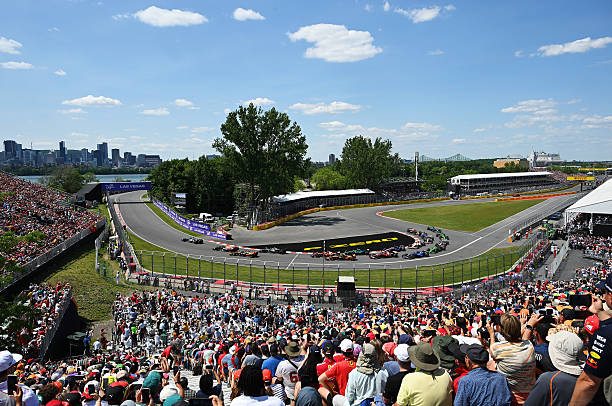
The location makes this one of the more unique venues in Formula 1. You are essentially racing through a park on an island, surrounded by water, with grandstands that get genuinely loud.
Circuit Gilles Villeneuve — What Makes This Track Different
Circuit Gilles Villeneuve is 4.361 kilometres long. Drivers complete 70 laps on race day, covering just under 305 kilometres in total. The layout combines long straights with slow, tight chicanes that punish any driver who pushes too hard at the wrong moment.
The track is named after Gilles Villeneuve, the legendary Ferrari driver who became a national hero in Canada before his death in 1982. Racing at this circuit carries weight that most venues simply do not have.
The most famous section is the final chicane, better known as the Wall of Champions. It sits at the end of the last straight before the start finish line and has collected Michael Schumacher, Damon Hill, and Jacques Villeneuve in the same weekend. Drivers who push too late on the brakes, or get a snap of oversteer at the wrong moment, go straight into the barriers. It happens every year.
The long straight before that chicane is also where DRS used to produce the most dramatic overtakes in the sport. In 2026, Manual Override Mode replaces that system and this track will be one of the first real tests of whether the new tool delivers the same racing quality.
Why the Canadian Grand Prix Produces Chaotic Races
Three things make Canada unpredictable every single year.
The first is the walls. Unlike traditional circuits with gravel traps and runoff areas, Montreal has concrete barriers close to the track on almost every corner. One mistake and the race is over. This keeps drivers honest but also means a single safety car can compress a 40-second lead into nothing in under a lap.
The second is the weather. Montreal in May-June is volatile. The race has been run in blazing heat, torrential rain, and everything between. Rain here transforms the race completely because the track has very little grip in wet conditions and the walls punish any error even harder.
The third is the safety car record. Canada consistently produces more safety car periods than most other rounds on the calendar. Strategy decisions get torn up, tyre windows close, and teams that gambled early suddenly find themselves in winning positions. Understanding how the safety car works in F1 matters more at this track than almost anywhere else on the calendar.
What the 2026 Cars Mean for the Canadian Grand Prix
The 2026 regulations have shifted performance in ways this circuit will expose clearly. Montreal rewards raw power on the long straights and mechanical grip through the slow chicanes. It punishes cars with poor braking stability and heavy energy consumption.
Mercedes has looked strong through the opening races of 2026. Antonelli leads the championship and the Silver Arrows have shown pace on tracks that demand efficient energy deployment. Canada plays to those strengths. The slow chicanes drain the battery hard, which means Manual Override Mode availability will vary wildly between teams depending on how well they manage electrical consumption through the lap.
Red Bull has struggled with their power unit this season. This circuit will not be kind to them if that problem persists. Every lap, the long straight followed immediately by heavy braking and a crawling chicane is exactly the cycle that exposes power unit weaknesses.
The 2026 driver standings heading into Canada will shape every strategy call made on race day.
How to Watch the Canadian Grand Prix 2026
Broadcast rights vary by country. In most markets the race airs live on Sky Sports F1, ESPN, or through the official F1 TV Pro streaming service. Check your local listings for the exact qualifying and race start times in your timezone as Montreal runs on Eastern Time.
FAQ
The Canadian Grand Prix 2026 will takes place on 22 May to 24 May in Montreal. Check the official F1 website for the confirmed session times in your local timezone.
The Canadian Grand Prix is held at Circuit Gilles Villeneuve on Île Notre-Dame in Montreal, Quebec, Canada.
The Canadian Grand Prix runs for 70 laps covering a total race distance of approximately 305 kilometres.
Valtteri Bottas holds the official lap record at Circuit Gilles Villeneuve, set in 2019 during the race at 1 minute 13.078 seconds.
George Russell won the Canadian Grand Prix in 2025.


1 Comment