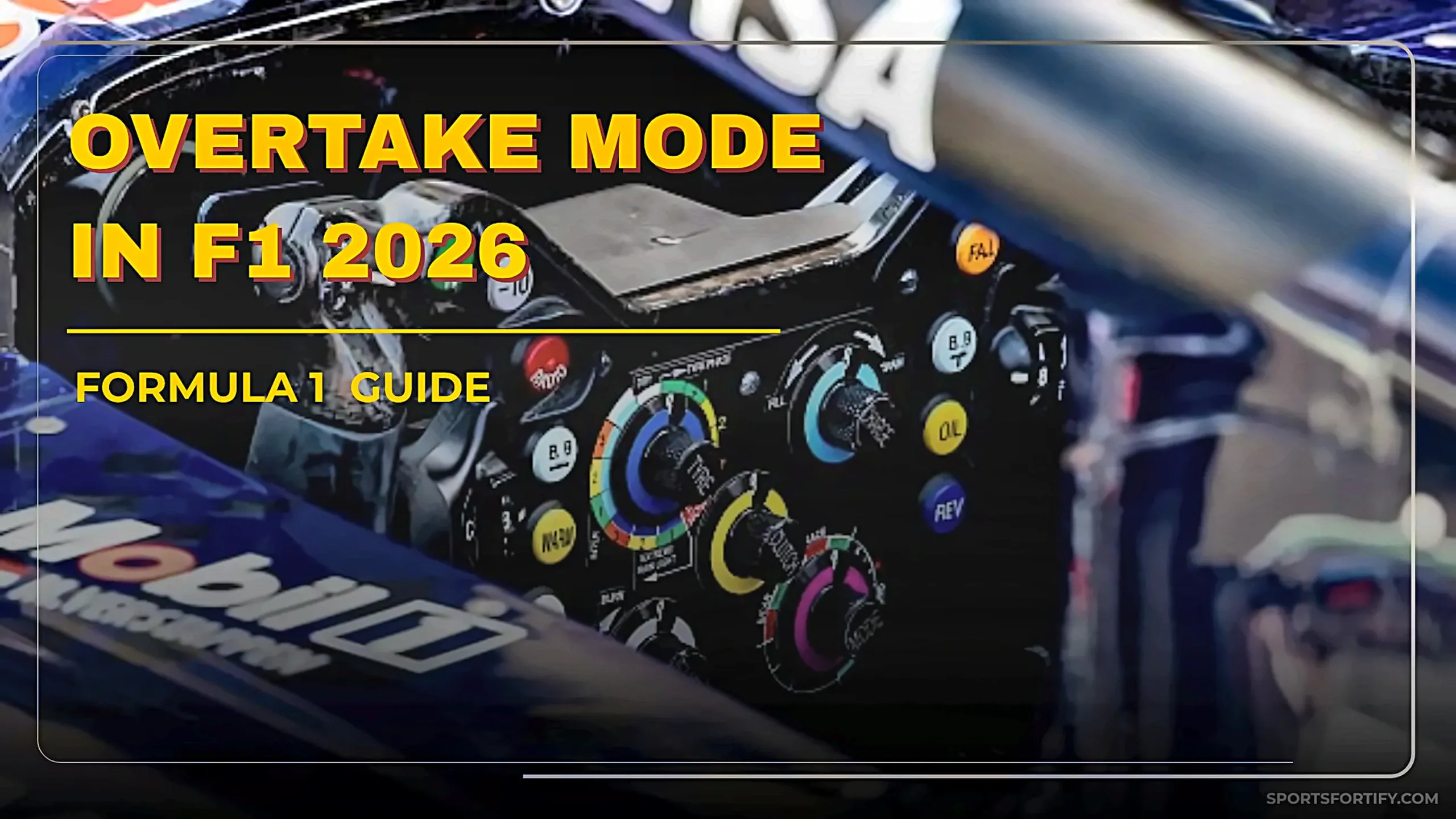
The 2026 season ended DRS for good. Plenty of fans are still catching up on what replaced it. Overtake mode in F1 is not just a renamed button. Drivers earn it, choose exactly when to use it, and can run out of it entirely if they are not careful.
What Replaced DRS in F1 2026
DRS was predictable. A driver got within one second of the car ahead at a detection point, a rear wing flap opened, drag dropped, and the chasing car picked up around 12 km/h on the next straight. The same thing happened every lap at the same spot on every circuit.
That predictability became the problem. Overtakes started looking less like racing and more like a scheduled event. The attacking driver waited for the detection zone, collected the advantage, and drove past. It worked. But it was rarely a battle.
The 2026 regulations scrapped DRS entirely and replaced it with an energy-based system. The cars are also smaller, lighter, and generate around 40 percent less drag than before. The whole package was redesigned so cars can follow each other closely without needing artificial help just to stay within range.
How Does Overtake Mode Work
When a driver gets within one second of the car ahead at a detection point, usually the final corner, the system registers it. On the following lap that driver gets access to an extra 0.5 megajoules of electrical energy on top of their normal allocation.
There are no fixed zones. No set point where the button activates. A driver can use that extra energy at a corner exit, halfway down a straight, or right at the braking point. The entire lap is available to attack from.
There is also a one-lap delay. A driver who closes the gap right at the detection point does not get the energy boost until the next lap begins. Closing the gap and staying there both matter. Drop back even slightly through the detection zone and the extra allocation does not arrive.
The defending driver is not helpless. Both drivers have the same active aero system and energy tools available. A car with strong energy recovery through a braking zone can build a reserve and match a rival’s deployment. Defending has become a tactical choice rather than just holding the racing line.
What Is the Boost Button
Boost is a separate tool that every driver can use freely at any point in the race. It deploys maximum power from the hybrid system whenever the driver presses the button, whether they are attacking, defending, or simply building a gap on a clear track.
Overtake mode in F1 is different because it requires earning the extra allocation first. Boost uses the energy a driver already has in the battery. Overtake mode adds extra energy to the pool, but only when the proximity condition is met at the detection zone.
Boost is what a driver already owns. Overtake mode is what they earn by being close enough at the right moment on the right lap. Both draw from the same hybrid system but through completely different conditions.
The active aero system runs around both tools. In Straight Mode the front and rear wing flaps flatten to reduce drag. In Corner Mode they return to high downforce for grip. Drivers manage all of this at once, which is why energy decisions in 2026 are far more layered than pressing a DRS button ever was.
Can You Run Out of Overtake Mode Energy
Yes. It has already happened in race conditions during the 2026 season.
Every driver starts each lap with a set energy budget and rebuilds it through regenerative braking under deceleration. The problem is that the energy spent does not always come back fast enough, especially in long stints with heavy traffic where braking zones get compressed or disrupted by cars around them.
A driver who attacks too aggressively early can arrive at the closing laps with nothing left. The rival behind, who managed their allocation carefully, arrives at that same moment fully charged. That gap in energy discipline has already decided positions this season.
The FIA reviewed energy deployment data from the first three rounds and has a vote scheduled to adjust how the system is balanced. Overtake mode in F1 may look slightly different by mid-season depending on what those changes produce. Teams manage this from the pit wall in real time, tracking energy levels throughout every stint and advising drivers on when to commit and when to hold back.
Does Overtake Mode Actually Work
Three races in, the early signs are good. The racing at Suzuka produced genuine battles across multiple sectors rather than a single move on the main straight. It was unpredictable in ways DRS rarely managed after its first few seasons.
Overtake mode in F1 has not been without issues. The energy management demands have hit some cars harder than others. Verstappen has been vocal about how the RB22 handles the system. But the problems are spread differently across the grid than a straight pace gap, which keeps more cars involved in real fights for longer.
Whether it fully replaces the spectacle of DRS is still an open question after three rounds. But less predictable is almost always better, and on that measure it is already doing its job.

1 Comment