
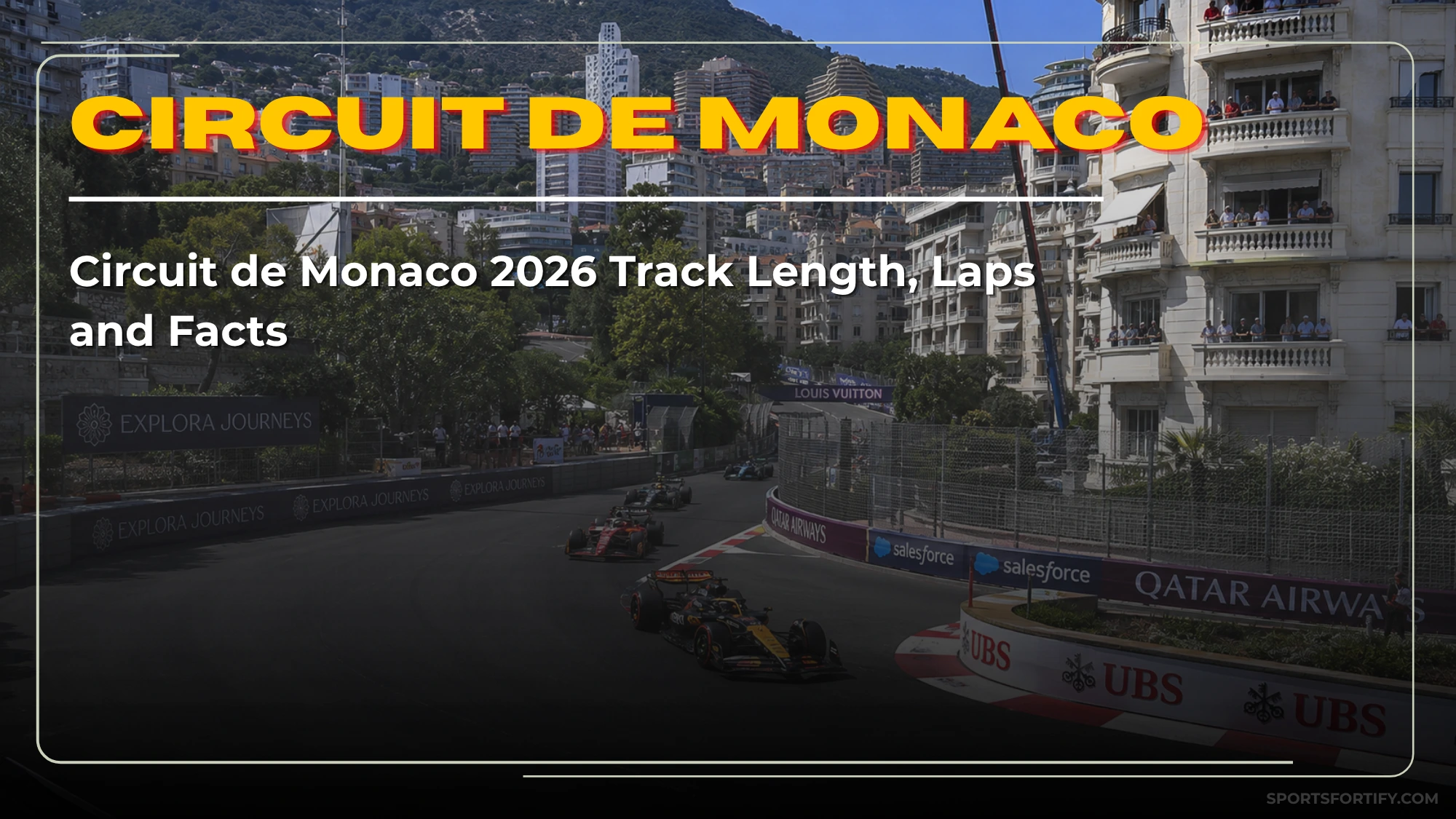
The circuit de monaco has not changed since 1929. Engineers build modern F1 cars for wide open tracks with runoff zones and escape roads. Monaco has none of that. What it has is 3.337 km of street, a tunnel, and barriers close enough to touch the whole way around. This guide covers everything before the 2026 Monaco GP on June 7.
| Location | Monte Carlo, Monaco |
| Track length | 3.337 km |
| Turns | 19 |
| Race laps | 78 |
| Race distance | 260.3 km |
| F1 lap record | 1:14.439, Rubens Barrichello (2004) |
| First Grand Prix | 1929 |
Where Is the Circuit de Monaco
The Circuit de Monaco sits in Monte Carlo, a district of the country of Monaco. Monaco sits on the French coast, wedged between France and Italy. The entire country is roughly 2 square kilometres. You could walk across it in 20 minutes.
There is no permanent race track. The circuit runs through Monaco’s actual public streets. Barriers go up for race weekend and come down after. The road past Casino Square is the same road locals drive every other day of the year.
Circuit de Monaco Track Layout and Length
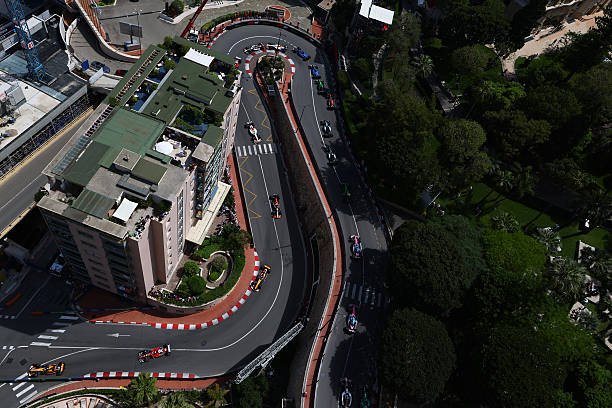
The circuit de monaco is 3.337 km long with 19 turns. It is the shortest circuit on the 2026 F1 calendar and also the slowest. Top speeds here reach around 288 km/h. At Monza, cars hit over 360 km/h. That gap tells you everything about what Monaco demands from a driver.
Here is how one lap unfolds.
- Rascasse. The final slow corner before the start-finish straight. One mistake here ends a lap and often ends a race.
- Sainte Devote. A tight right-hander at the base of the hill. The first serious braking zone of the lap and a common spot for first-corner contact.
- Casino Square. A flat-out kink through the famous plaza. One of the most photographed corners in motorsport.
- Loews Hairpin. The tightest corner on the entire F1 calendar. Cars slow to roughly 50 km/h. Drivers sometimes park here during qualifying to ruin a rival’s lap. Michael Schumacher did exactly that in 2005 and started from the back of the grid.
- Tunnel. Drivers go from bright coastal sunlight into full darkness at speed and straight back out again. One of the most dramatic stretches in motorsport.
- Swimming Pool complex. A fast flowing section alongside the harbour. The barriers are millimetres from the racing line through here.
- Some sections of this circuit are under 7 metres wide. F1 cars are approximately 2 metres wide. There is almost no room to pass. That is exactly why qualifying at Monaco matters more than at any other race.
How Many Laps Is the Monaco GP
The Monaco GP is 78 laps. The total race distance is 260.3 km.
Most F1 races target around 305 km, the minimum set by the regulations. Monaco is an exception. Running 305 km here would require roughly 91 laps and would push the race past the two-hour time limit. So the FIA sets the Monaco race at 78 laps and 260 km instead.
Think of it this way. At Silverstone, one lap covers around 5.9 km. At Monaco, one lap covers 3.337 km.
Monaco needs more laps to cover any real distance. Even so, 78 laps only reaches 260 km, which is short of the 305 km target at every other race.
How Long Is the Monaco GP
The Monaco GP runs for around two hours. It is one of the slowest races on the calendar. The average speed across the full 78 laps is roughly 150 km/h. At Spa in Belgium, the average tops 230 km/h. Tight corners, narrow streets, and constant caution behind the wheel keep speeds down for the entire race.
Safety car periods extend Monaco further. One barrier hit and the entire field restacks. In 2026, the FIA banned front wing angle changes during pit stops at Monaco. Teams must keep the same wing setting for the full race. Removing that option makes tyre management and pit stop timing harder to get right.
Understanding how the F1 safety car works helps new fans follow exactly what is happening when the board goes up at Monaco.
Circuit de Monaco Lap Record F1
Rubens Barrichello holds the F1 lap record at the circuit de monaco. He set a time of 1:14.439 in a Ferrari during 2004 qualifying. That record has stood for over two decades.
Here is why that is surprising. Modern F1 cars are 3 to 5 seconds per lap faster than 2004 cars at almost every other circuit. At Spa, Silverstone, and Suzuka, 2004 qualifying times are ancient history.
At Monaco, nobody has broken a 2004 time in over 20 years. Monaco runs on precision, not raw speed. Better wing setup and more powerful engines help everywhere else. Here, the track is too narrow and too tight for those gains to matter.
Charles Leclerc grew up in Monaco and won his first home race in 2024. He knows every centimetre of this circuit.
Lewis Hamilton lines up for the 2026 race in his first Monaco GP as a Ferrari driver. Both have pushed for the record. Neither has taken it. That record remains one of the most stubborn statistics in modern F1.
Why Is the Monaco GP So Famous
Monaco is part of the Triple Crown of Motorsport. The other two races in that group are the Indy 500 and the 24 Hours of Le Mans. Only one driver in history has won all three: Graham Hill, in the 1960s. That membership makes Monaco something no other Grand Prix can claim.
But the real reason Monaco matters is what it demands from a driver. Every other circuit has runoff zones, gravel traps, or tarmac escape roads. A mistake elsewhere means losing a few tenths and fighting back.
At Monaco, one wheel on the barrier means a broken car and a walk back to the garage. The walls sit right on the racing line for all 78 laps. There is no forgiveness anywhere.
Ayrton Senna won here six times. At the 1984 Monaco GP, Senna ran second in the rain and closed on the leader by 2.5 seconds every lap. Officials red-flagged the race before he could take the win. That moment remains probably the most discussed what-if in F1 history.
In 2003, not one car passed another during the entire Monaco race. The driver who qualifies on pole starts at the front and stays there.
That is not a flaw. That is what Monaco produces. The circuit decides the race before the lights even go out.
Understanding how the F1 points system works shows just how much a Monaco win can shift a championship fight across a full season.
How to Watch the Monaco GP 2026
Monaco runs June 5 to 7 this year, not the usual late May slot. F1 swapped Monaco and Canada on the 2026 calendar. Start times, the full weekend schedule and where to watch are in the Monaco GP 2026 weekend guide.
FAQ
The Monaco GP is 78 laps of the Circuit de Monaco, covering 260.3 km in total. The lap count is higher than most races because the circuit is only 3.337 km long.
Monaco holds its first two practice sessions on Thursday instead of Friday. This is a long-standing tradition tied to how the principality manages a racing event in the middle of a working city. Monaco is the only race on the 2026 F1 calendar that still follows this format.
Some sections of the Circuit de Monaco are under 7 metres wide. F1 cars are approximately 2 metres wide. That gap is why passing is almost impossible during the race and one small mistake ends a weekend.
From the 2026 Monaco GP, the FIA requires teams to run fixed aerodynamic surfaces meaning the front wing angle cannot be changed during pit stops. At every other race, teams adjust the wing angle as part of pit stop strategy. At Monaco in 2026 that option is removed, making tyre management and pit stop timing harder to get right.

4 Comments