
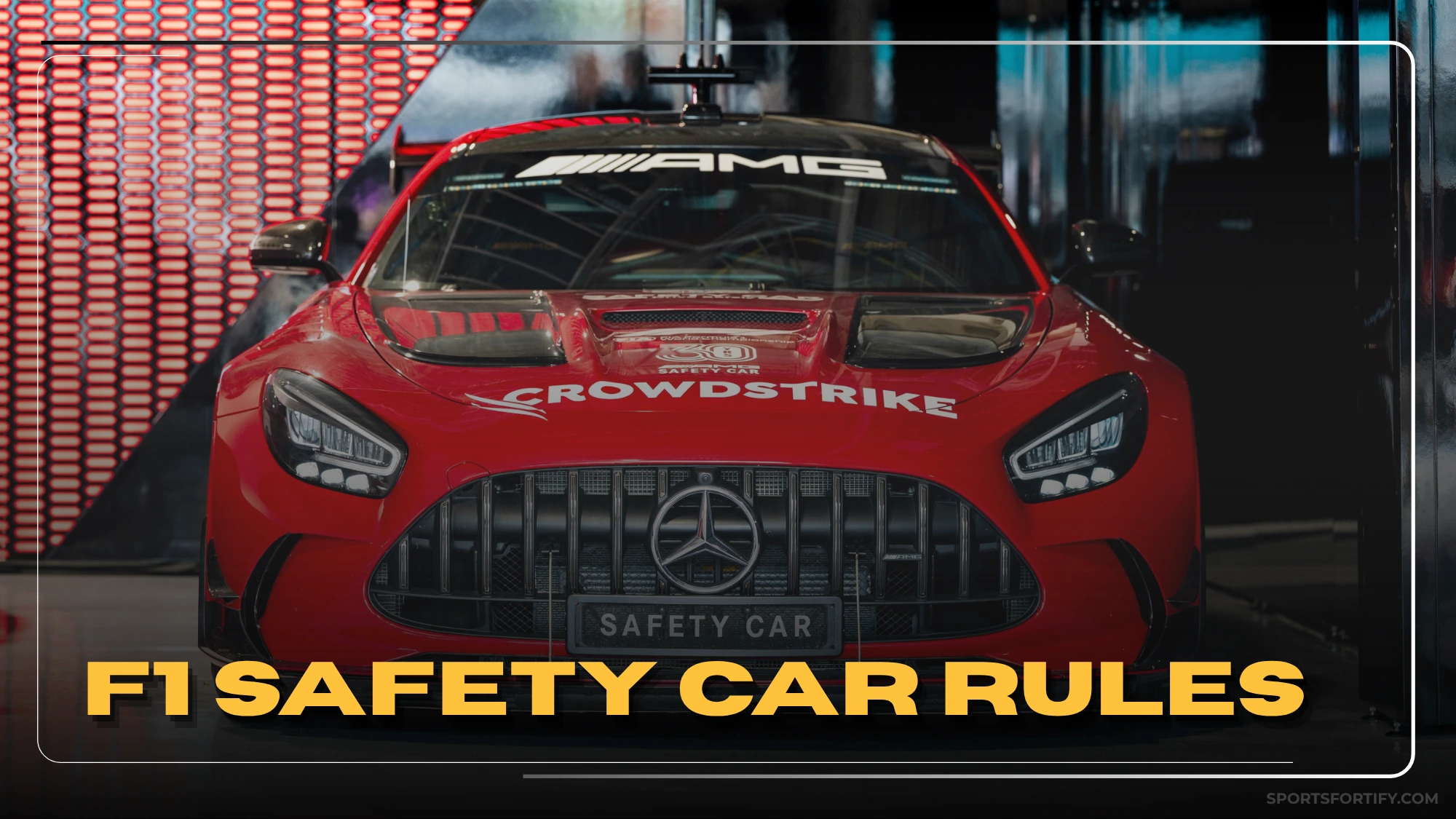
The F1 safety car deploys when track conditions become too dangerous for racing speed. It controls the field by limiting car speeds and bunching the pack together while marshals clear debris, attend to incidents, or repair barriers. The safety car remains on track until conditions are safe enough for normal racing to resume.
What Is the F1 Safety Car
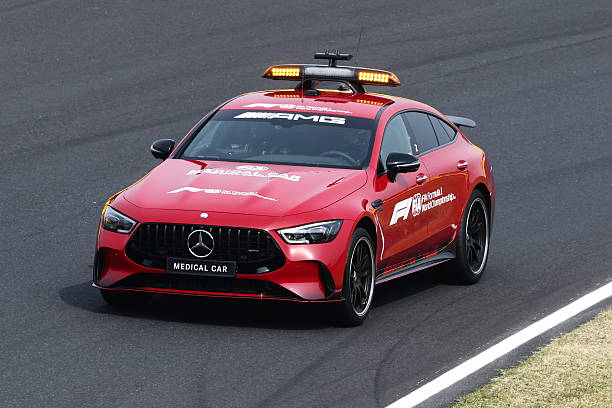
The safety car is a high-performance road car that leads the entire field when conditions become too dangerous for racing. A Mercedes-AMG GT Black Series currently fills that role. It produces over 720 horsepower, goes from 0 to 100 km/h in 3.2 seconds, and runs fast enough to keep F1 tyres and brakes at proper working temperatures while marshals deal with whatever is happening ahead.
Bernd Maylander has been in the seat since 2000. More than 25 years of leading the fastest drivers on the planet around racing circuits. When he enters the track ahead of the race leader, every driver queues up behind him. The orange and yellow lights are flashing. No overtaking. No exceptions.
When Does the Safety Car Come Out
Race control sends the safety car out when yellow flags alone are not enough to protect the people working on track. A crash leaving debris across the racing line is the most common trigger. A car stopped near a blind corner or blocking the pit lane entry forces the safety car out rather than just waving yellows.
Heavy rain with aquaplaning risk does the same. So does barrier damage needing urgent repair. Yellow flags tell drivers to slow down and be careful. The safety car tells them there are marshals standing on a live racetrack and normal caution is nowhere near enough.
The race director makes the final call using live reports from marshals posted around the entire circuit. That call typically happens within seconds of an incident being flagged. Speed matters when someone is on foot next to a racetrack doing 300 km/h.
F1 Safety Car Rules Explained
The f1 safety car rules cover four main areas every driver must follow the moment it deploys.
- Every driver must slow down immediately when safety car boards appear at marshal posts
- No car can overtake another while the safety car is on track
- The only exception is passing a car with visible mechanical damage that is blocking the queue
- Every driver must maintain the correct electronic gap to the car ahead too close or too far back both draw penalties
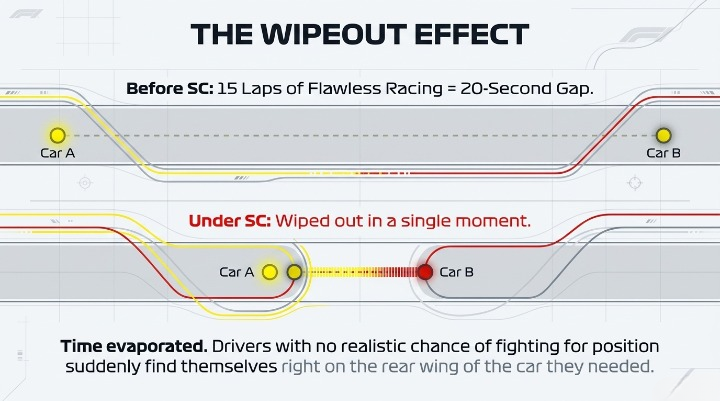
Pit lane stays open. This is where the race gets genuinely interesting. Teams call their drivers in during safety car periods because pit stops cost almost nothing in lost time when the whole field is crawling together. A 20-second gap built over 15 laps of racing is wiped out the moment the safety car bunches the field. Cars exiting the pit lane can also rejoin ahead of the safety car if they come out before it passes their pit exit. Get that timing right and you gain positions without ever overtaking on track.
Overtaking under the safety car earns a 10-second time penalty or a drive-through. Repeat violations can end in disqualification. The f1 safety car rules on overtaking are strict for one reason: the restart becomes genuinely dangerous if cars are out of order when the field is released at full speed.
How Fast Does the F1 Safety Car Go
The safety car runs at around 200 to 250 km/h depending on the circuit. Monaco keeps it toward the lower end. Spa and Silverstone push it toward the upper range.
That speed is not random. F1 tyres only generate proper grip above a certain temperature. Carbon brakes only give consistent feel when they are hot. Drop too far below those thresholds and the restart becomes genuinely dangerous. Drivers get cold tyres, wooden brakes, and full racing speed at the same time. The first corner can look like a car park.
Bernd Maylander reads two things simultaneously. Fast enough for the cars behind him to stay in their temperature window. Slow enough for marshals to work safely on the same circuit in front of him. It is a harder balance to strike than it looks on the broadcast.
How Safety Car Restarts Work
One lap before it returns to the pit lane, the lights on the safety car roof switch off. Every driver knows the restart is coming. They start weaving left and right, braking hard, accelerating suddenly, doing everything possible to get heat back into cold tyres. The field tightens.
When the safety car turns into the pit lane, racing resumes the moment it leaves the track surface. The race leader controls the restart pace up to the safety car line painted on the circuit. No driver can pass before that line. After it, the race is fully live.
Restarts change races. At the 2023 Bahrain Grand Prix, the safety car bunched cars separated by over ten seconds. Drivers who had no real chance of a fight suddenly found themselves right on the rear wing of the car they needed. The first two corners after the restart settled the podium. That is the safety car effect in one race.
Virtual Safety Car vs Full Safety Car

The Virtual Safety Car handles smaller incidents without deploying a physical car. Every driver receives a target delta time on their steering wheel and must match it. Cars slow proportionally across the whole field. The gaps between them stay the same.
Race control uses the VSC for a single car stopped safely off the racing line or minor debris in one sector. It clears faster because there is no physical car to retrieve and no bunching of the field.
The strategic difference is significant. A full safety car wipes out every gap in the field, no matter how long a driver spent building it. A VSC preserves those gaps completely. If you are leading by 25 seconds, a VSC keeps your advantage intact. If you are second and chasing, you want the full safety car. That is why teams respond completely differently depending on which one race control announces and why the radio communication in those first seconds tells you everything about where each team thinks they stand.
Frequently Asked Questions
Yes. The pit lane stays open during safety car periods. Teams use this window for pit stops because the whole field is traveling slowly, meaning far less time is lost compared to a normal pit stop.
Overtaking under the safety car results in a 10-second time penalty or a drive-through penalty. The driver must return the position immediately or face harsher penalties including potential disqualification.
The race director makes the final decision based on real-time reports from track marshals and race control officials. The decision typically happens within seconds of an incident being reported.


4 Comments