The reigning world champion warns that a 500 percent increase in electrical deployment makes the charge to Turn 1 a tactical minefield where one wrong move drains the battery for an entire lap.
As the paddock descends on Bahrain for pre-season testing, the conversation has shifted from the glory of 2025 to the sheer technical anxiety of the new regulations. The 2026 F1 regulations have delivered cars that are smaller, lighter, yet beneath the carbon fiber skin lies a powertrain that Norris fears will make the iconic standing start a treacherous exercise in “speed chess.
The heart of the issue is a fundamental shift in how Formula 1 generates its speed. The 2026 power units now operate on a near 50/50 split between the V6 turbo and the electric MGU-K. On paper, it sounds like a masterpiece of engineering. 1,000 brake horsepower with a massive 350kW boost from the battery—but for the person in the cockpit, it is a logistical headache that starts the moment the five red lights go out.
During a recent debrief, Norris was candid about the “complications” that come with losing the MGU-H, the heat recovery unit that used to keep the turbo spinning and the battery topped up. In the old days, you could use the battery to balance the turbo perfectly during those initial meters of acceleration. Now, as soon as you touch that battery to help yourself off the line, you are effectively stealing energy from the rest of your first lap.

Lando Norris pointed to the Mexican Grand Prix as a prime example of where this could all go wrong. At the Autódromo Hermanos Rodríguez, the run from the start line to Turn 1 is one of the longest on the calendar. If a driver gets greedy with their battery deployment to secure the lead, they could find themselves “clipping”. It creates a terrifying scenario where the leader becomes a sitting duck at 200mph while their rivals, who saved a few kilojoules, come flying past.
The paddock is already buzzing with similar concerns. Esteban Ocon, now settling into his new home at Haas, noted after the Barcelona shakedown that overtaking might actually become more difficult if drivers are forced to save energy constantly. We are seeing a new terminology emerge in the garages—words like “Manual Override” and “Z-mode” for high downforce versus “X-mode” for low drag. The 2026 F1 Regulations car is effectively a transformer, and the driver is the one pulling the levers while trying to maintain a gap.
MGU-K will now recover roughly 8.5 megajoules of energy per lap, which is double what we saw last year. However, that recovery only happens under braking or lifting off the throttle. This has led to the “annoying” reality that some drivers, including Haas rookie Oliver Bearman, have criticized—the need to “lift and coast” even when you are in a flat-out battle. Imagine being a world champion and having to back off on a straight just to ensure your battery doesn’t die before the finish line.
Historical context tells us that F1 always goes through these growing pains whenever the formula changes. We saw it in 2014 with the birth of the hybrids and again in 2022 with the return of ground effect. Each time, the greats like Max Verstappen and Lewis Hamilton—who is currently finding his feet in a striking red Ferrari—eventually master the system. But the 2026 F1 Regulations shift feels different because the “energy debt” is so much higher. If you spend too much at the start, you might be paying for it for the next three laps.
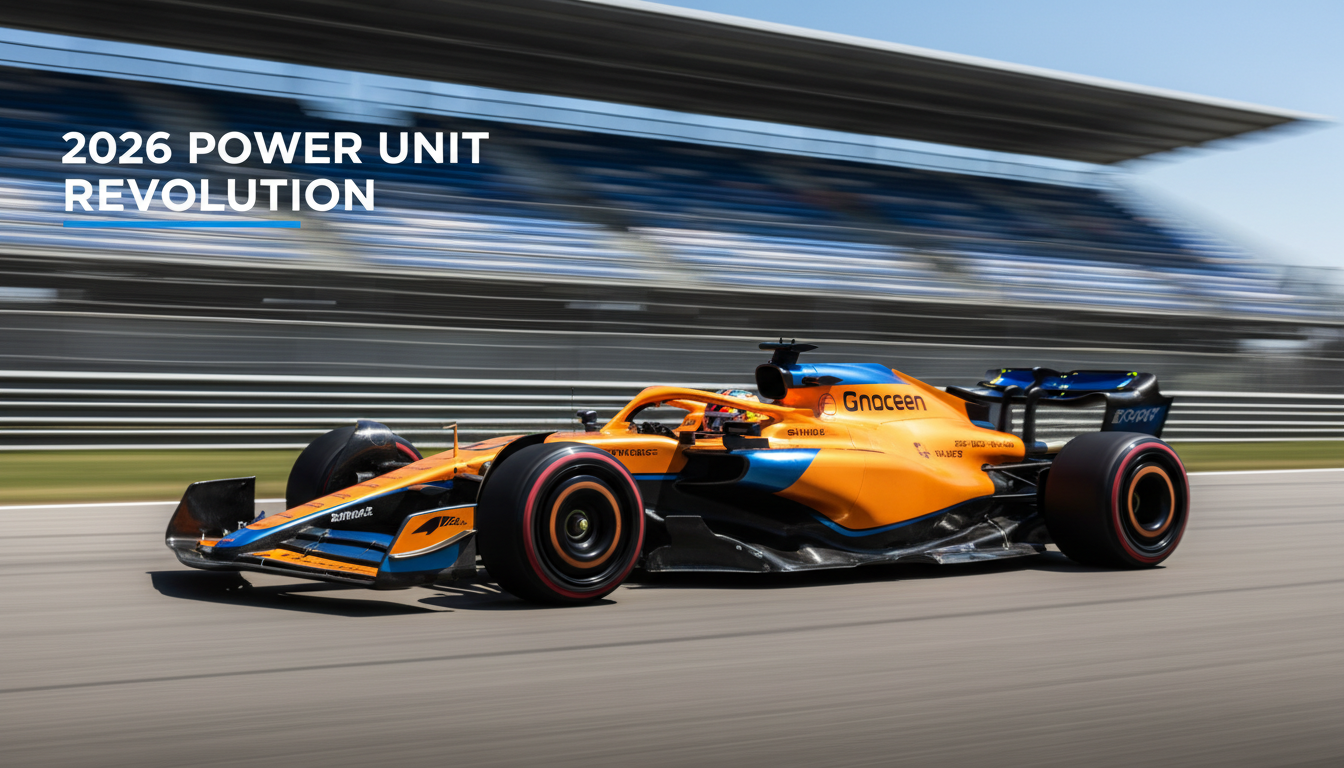
As we prepare for the first lights-out of this new era, the eyes of the world will be on those initial seconds. Will we see the clinical, perfect launches of the past, or will the grid be a chaotic jumble of cars “harvesting”. Lando Norris has made his stance clear—it is going to be trickier, it is going to be messier, and it might just be the most mentally taxing season of his career. For the fans, it promises a spectacle of strategy, but for the man in the McLaren, it is a high-stakes game of keeping the lights on