
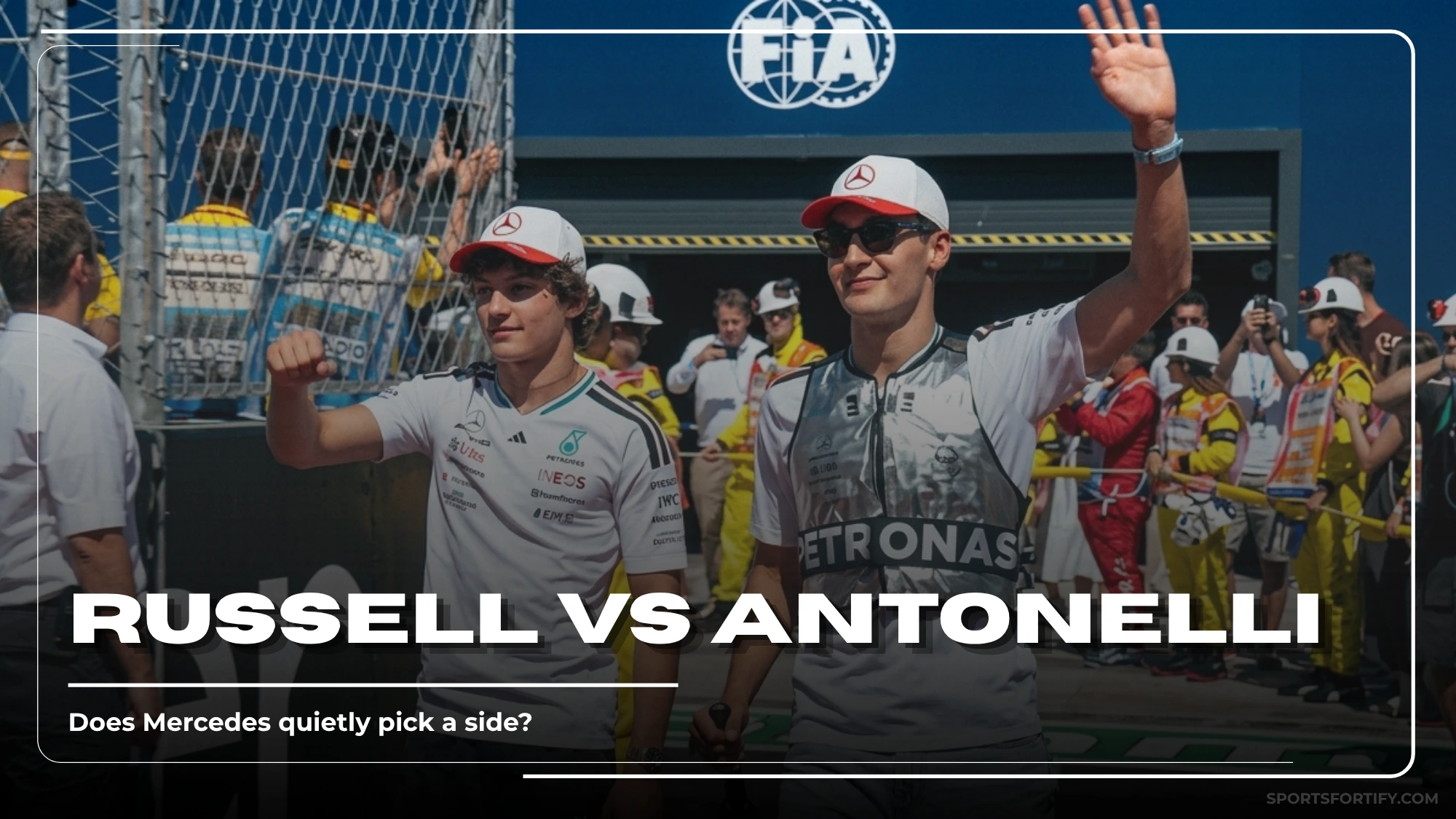
George Russell vs Antonelli is the title fight of 2026, and recently we saw how fast it can swing. Kimi Antonelli crashed out of Q1 while Toto Wolff was away from the garage. That absence became the clearest test yet of F1’s favoritism trap. How much does a driver’s season depend on the people around him, and how much on his own pace?
George Russell vs Antonelli and the Mercedes experiment nobody planned
Antonelli arrived in Baku with an 81-point championship lead. He left with 66. Wolff skipped the weekend to watch his son’s karting in Italy. That left deputy team principal Bradley Lord in charge.
Then Antonelli hit the wall at Turn 1 in Q1. He started 16th and fought back to fifth. Meanwhile, Russell took pole and won the race, with Verstappen a tenth behind. He did it while sick with flu, too. He missed media duties on Thursday and sounded hoarse on team radio. According to Sky Sports, it was the first time in six rounds that Russell out-qualified and outraced his teammate. That timing matters more than the result.
Antonelli was honest about it afterward. He blamed a misjudgment of the changing grip and called it his worst weekend of the season. This is the same driver who won at Monza from 19th on the grid. So the crash looks like a rare slip and not a weakness.
Former driver Ralf Schumacher pointed at the gap directly. He said Wolff would likely have sat down with Antonelli to review data after a tough day. Schumacher called that absence a real factor and not a coincidence. Lord insists the result changes nothing for Antonelli’s mindset. However, the timing makes that hard to take at face value.
The Russell question nobody wants to ask
Here is the uncomfortable question underneath all of this. Does a team quietly benefit when its title fight stays alive? A strong Russell weekend keeps the story open for casual fans. In the George Russell vs Antonelli fight, Baku fits that idea almost too neatly.
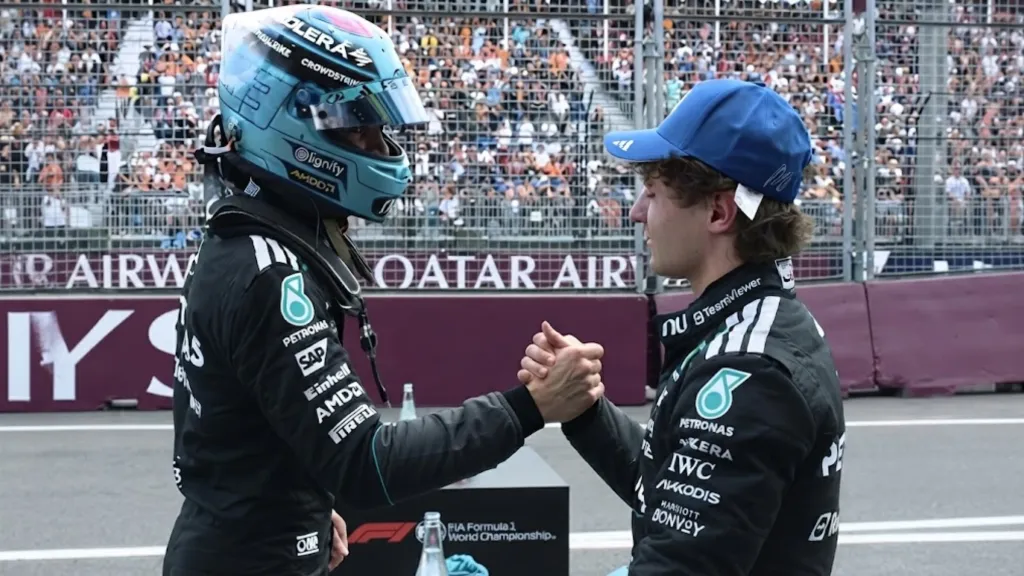
Nobody needs a secret memo for this to work. A team does not have to rig a race to benefit from a good storyline. A sick driver beating a crashed-out teammate is a great story on its own. It keeps casual fans watching a title fight that might otherwise look settled by August. So the real question is whether Mercedes manages that rhythm or simply gets lucky. Either way, the team has little reason to settle it in public.
The skeptical read matters too. Antonelli crashed because he misjudged the grip, and he said so himself. Russell drove well because some drivers perform when they are ill. Blaming boardroom strategy gives Mercedes credit for a level of control that team orders rarely achieve. Still, the coincidence is close enough that it is fair to sit with the discomfort.
Red Bull and the seat that eats teammates
Red Bull’s version of favoritism is not a radio call. It is structural. Every full-time teammate Verstappen has had since 2018 has struggled to match him. That list runs from Gasly to Albon to Perez to Lawson to Tsunoda. Hadjar is the latest name in that line.
Baku offered a rare counterexample, though. Hadjar held a tyre advantage over Verstappen late in the race, and Red Bull chose not to step in. Team boss Laurent Mekies called both drivers disciplined and praised Hadjar for racing smart. As a result, Red Bull collected its first double podium of the season, with Verstappen second and Hadjar third.
That restraint is notable because it is so rare. The car, the development focus and the team history still orbit Verstappen first. One fair weekend does not undo a pattern six years in the making.
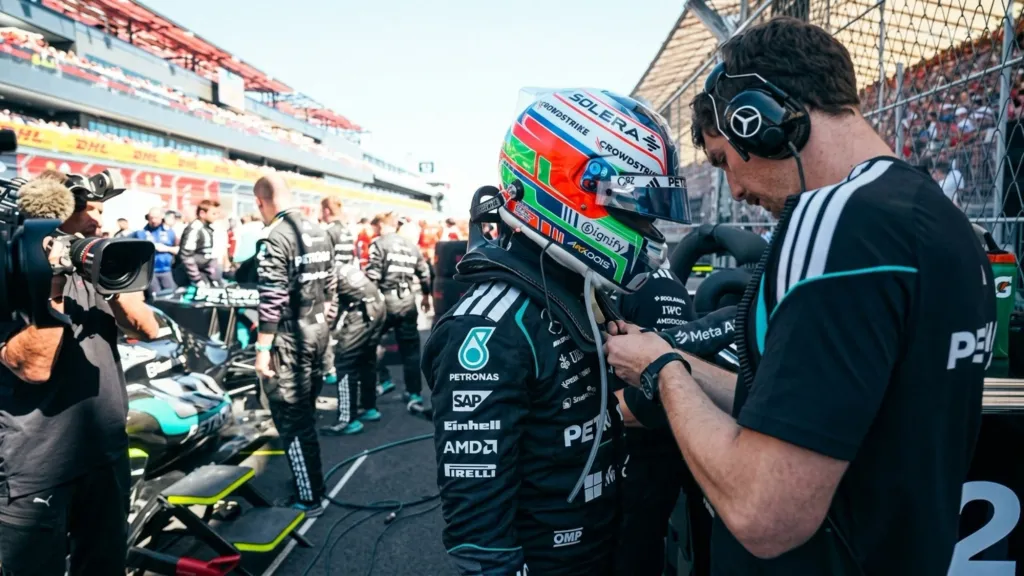
McLaren and the warning from last year
McLaren already ran this experiment, and it went badly. The team’s papaya rules asked Norris and Piastri to race fairly. That promise cracked at Monza in 2025. After a slow pit stop for Norris, the team told Piastri to give the position back. Norris went on to win the title by a tiny margin.
Piastri called it fair at the time. Even so, the episode drew plenty of questions about how McLaren treated him. The team has since loosened the rules for 2026. Management interference turned out to be the real problem, not a lack of pace on Piastri’s side.
The verdict
Favoritism in F1 rarely shows up as a radio call. It shows up in who gets help during a bad weekend. It shows up in who gets left to find the answer alone. And sometimes it shows up in which results land just when a title fight needs oxygen.
Mercedes just ran that test without meaning to. In the George Russell vs Antonelli fight, the lead survived Baku, but the margin shrank on the one weekend his mentor stepped back. The F1 standings still favor Antonelli by 66 points.
Red Bull’s structure still favors Verstappen by default, even when the team plays it straight. McLaren already paid the price for managing a title fight too closely, and it spent all winter walking that back.
None of these teams needed to say a driver’s name out loud. The favoritism trap sets itself. It works through who gets built around, who gets left to adapt, and which wins arrive right on schedule.

1 Comment