
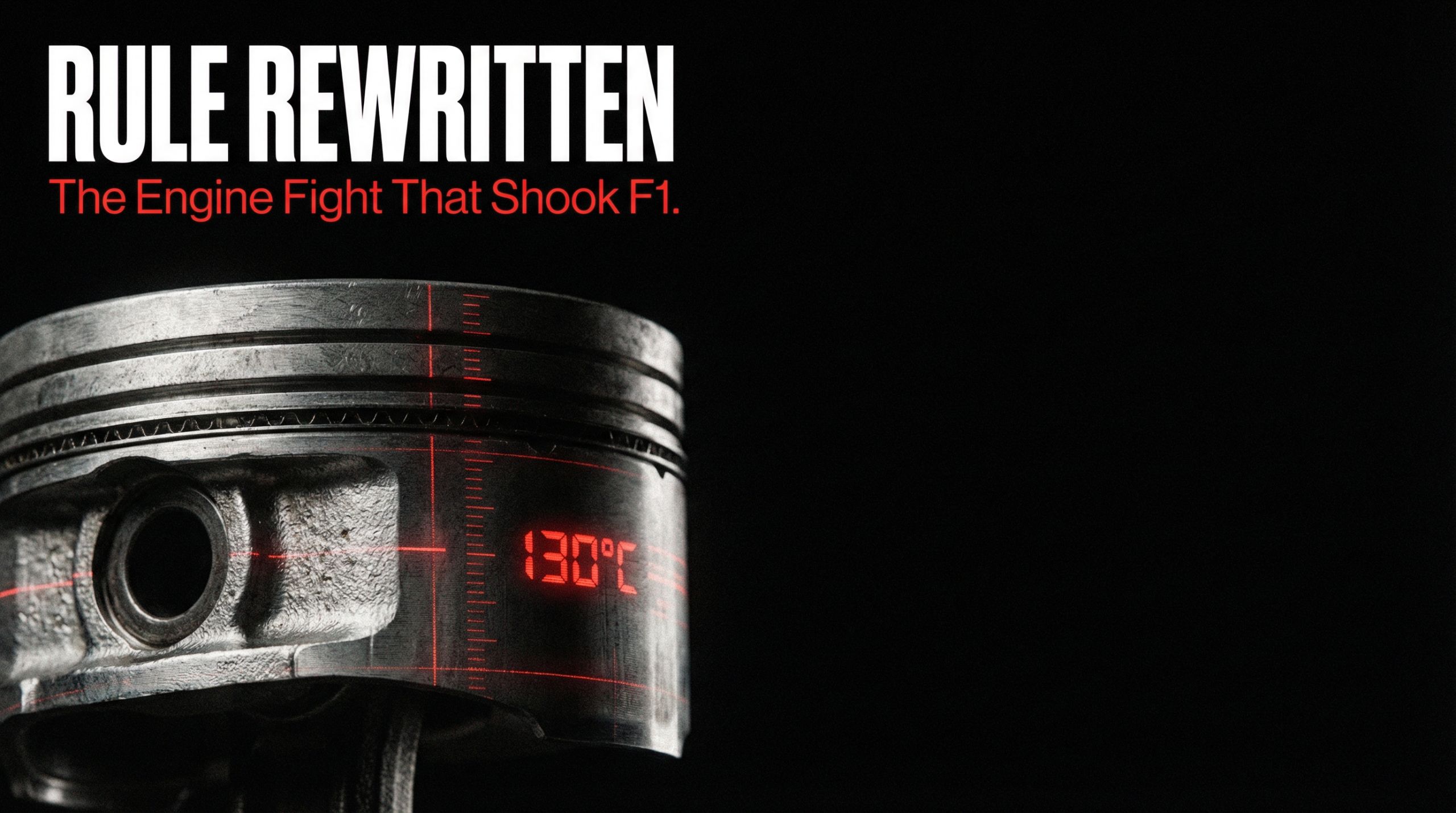
The FIA confirmed a formal F1 engine rule change on Saturday. Mercedes’ rivals forced the governing body into action. Specifically, the compression ratio measurement at the centre of a bitter pre-season dispute will now shift to 130C operating temperature from 1 June 2026. A further revision follows for the 2027 season. Every power unit manufacturer approved the change unanimously.
Originally, the 2026 regulations capped compression ratios at 16:1 measured at ambient temperature. Mercedes complied fully. The FIA verified their power unit at both ambient and operating temperatures. It passed every single check. However, the problem was never about legality. Instead, it was about engineering cleverness.
This decision followed weeks of growing speculation over whether the Mercedes 2026 engine could face a ban entirely.
Mercedes found a way to limit the natural thermal expansion that reduces compression ratios at high temperatures. In simple terms, metals expand when they get hot. As a result, that expansion normally lowers the compression ratio.
However, Mercedes controlled that expansion better than anyone else. Consequently, their engine maintained a higher effective ratio during actual racing conditions. That delivered more efficient combustion and more power. Paddock estimates placed the advantage at up to 0.3 seconds per lap.
Meanwhile, Mercedes boss Toto Wolff dismissed those numbers. He called the real gain “a few horsepower. In England you would say a couple, which is more like two or three.”
Ferrari and Red Bull triggered the formal challenge first. Subsequently, that challenge escalated rapidly after rivals publicly plotted a formal pre-season protest against Mercedes’ power unit advantage.
Audi argued that new manufacturers faced an even steeper disadvantage. They simply lacked decades of F1 materials research behind them. Additionally, Honda backed the push for revised measurement standards. Together, the four manufacturers presented a united front that left the FIA with no room to resist.
The compromise delivers a two-phase solution. From 1 June, compression ratios will be measured at 130C alongside ambient temperature. Then, from 2027, the ambient measurement disappears entirely.
This creates an interesting twist. Manufacturers will actually be permitted to exceed 16:1 at ambient temperature next year. They just need to comply at 130C. Therefore, the very limit introduced to attract new entrants like Audi and Ford effectively loosens from next season.
Crucially, the first several races run under the original regulations. That includes the Australian GP. As a result, Mercedes keeps whatever advantage their materials technology delivers through the opening rounds.
Furthermore, the F1 engine rule change does not penalise Mercedes retroactively. Development tokens already spent remain valid. In other words, no team loses work already completed.
The FIA’s statement acknowledged the scale of the 2026 overhaul. It praised “collective learnings” from pre-season testing. However, one final line grabbed immediate attention.
“Further evaluation and technical checks on energy management matters are ongoing.” That confirmed the compression ratio fight is not the only dispute brewing.
Specifically, the electrical side of the new 50/50 power split now faces its own scrutiny. Consequently, this F1 engine rule change might only be the first of several regulatory adjustments before the 2026 season reaches its midpoint.
The deal is done. The wording is settled. However, the suspicion across the paddock is far from over.



1 Comment