
Every F1 Grand Prix explained simply comes down to one question. What actually happens between the lights going out and the champagne spraying? The term “Grand Prix” comes from French, literally translating to “great prize.” It originated in early 20th-century motor racing when prestigious events awarded significant prizes.
Today it simply refers to an official Formula 1 championship race. A typical F1 season features 24 Grands Prix across different countries. However, the 2026 calendar was reduced to 22 races after the FIA cancelled the Bahrain and Saudi Arabian rounds due to safety concerns in the Middle East. Each Grand Prix awards championship points. Each one tells a completely different story.
WHAT HAPPENS BEFORE THE LIGHTS GO OUT
Race day buzzes with anticipation long before cars line up on the grid. The morning begins with the driver parade. All twenty-two drivers wave to fans from open-top vehicles circling the track. Additionally, the national anthem of the host country plays while drivers stand solemnly on their grid positions.
Then comes the grid walk. This chaotic thirty-minute window allows celebrities, sponsors, team principals and broadcasters to mingle among the cars. Only paddock access holders get this privilege. Furthermore, fifteen minutes before start time, cars complete the formation lap. Drivers weave side to side, warming tyres and brakes while checking track conditions.
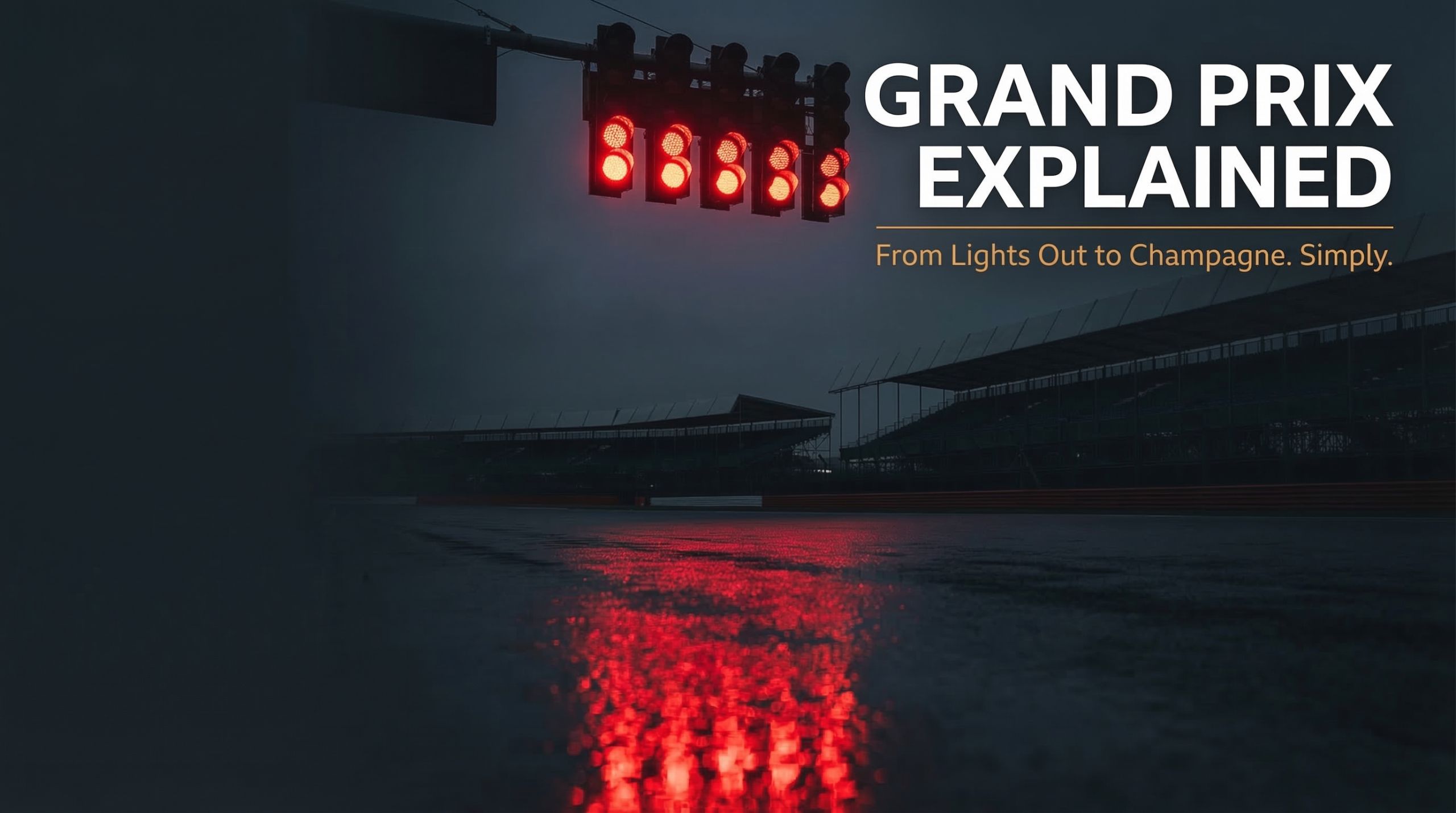
They return to their grid positions with engines screaming. Then one by one, five red lights illuminate above the start line. The entire circuit holds its breath. When those lights disappear, everything changes instantly.
THE START AND WHY THE FIRST LAP DECIDES EVERYTHING
The start is arguably the most important moment of any F1 Grand Prix explained in simple terms. Twenty-two cars launch simultaneously toward Turn 1 in what resembles a 350 kilometre per hour drag race. Drivers jockey for position, sometimes running three wide into corners designed for single-file racing. Additionally, the bravery required at this moment is extraordinary. One misjudgment means disaster. One perfect launch means positions gained that take twenty laps to earn otherwise.
Furthermore, first-lap incidents happen frequently in modern Formula 1. The 2026 Chinese Grand Prix saw Isack Hadjar spin on the back straight during the opening lap. Sergio Perez collided with teammate Bottas at Turn 3. Consequently, half the midfield was reshuffled before the first lap was completed.
When serious crashes occur, the Safety Car deploys and bunches the entire field together. For minor incidents, the Virtual Safety Car slows all cars via speed limits without physically grouping them. Surviving lap one unscathed often determines whether a driver challenges for victory or spends two hours recovering.
WHAT HAPPENS DURING THE RACE ITSELF
A Grand Prix covers approximately 305 kilometres or lasts two hours maximum, whichever comes first. The number of laps varies by circuit length. Monaco requires 78 laps while Spa-Francorchamps needs only 44. Shanghai demanded 56 laps for the 2026 Chinese Grand Prix. Additionally, drivers must manage tyre degradation, fuel consumption and energy deployment across every single lap. The 2026 regulations demand significantly more electrical energy management than any previous era.
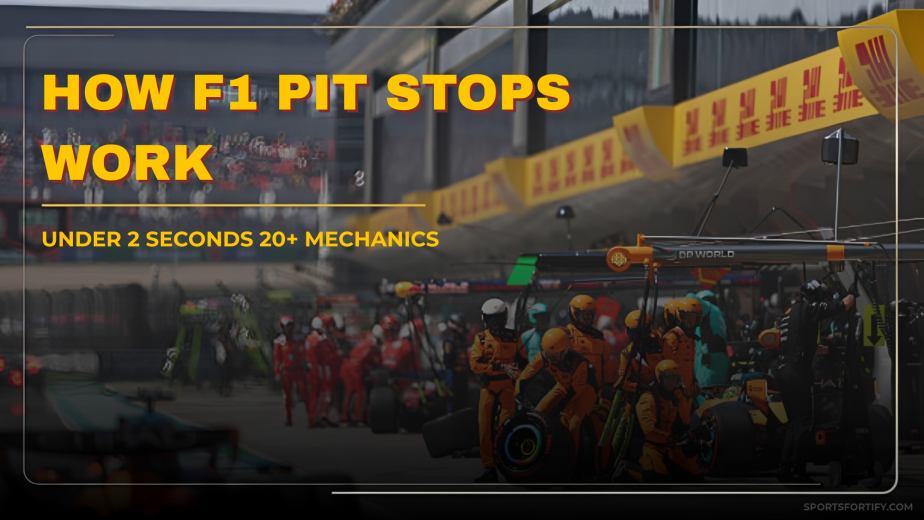
Furthermore, pit stops create the strategic drama that defines modern racing. Teams choose between soft tyres that deliver maximum speed but wear quickly, medium tyres that balance pace and durability, and hard tyres that last longest but sacrifice raw performance.
Most races feature one-stop or two-stop strategies. Pitting too early means tyres fade in the closing laps. Pitting too late means competitors gain track position during the stop. Knowing what F1 tyre compounds actually do transforms how fans interpret every pit stop decision during a race. Think of tyre strategy as a chess match happening at 300 kilometres per hour.
SAFETY CARS AND RED FLAGS CHANGE EVERYTHING
Race Control interventions add unpredictability that transforms entire race outcomes. The Safety Car bunches the entire field behind a pace car. Gaps built over thirty laps disappear instantly. Consequently, teams face immediate strategic decisions about whether to pit for fresh tyres during the reduced speeds. The 2026 Australian Grand Prix was decided entirely by a Virtual Safety Car. Mercedes pitted both cars. Ferrari stayed out. That single decision handed Mercedes a dominant one-two victory. Understanding exactly how the virtual safety car works reveals why those seconds of hesitation cost Ferrari the entire race.
Additionally, the Virtual Safety Car requires all drivers to reduce speed by approximately 40% without physically bunching together. However, the most dramatic intervention is the Red Flag. This stops the race completely for serious incidents. Cars return to the pit lane. Teams can change tyres and make repairs. Strategies get completely reshuffled. Furthermore, the restart after a Red Flag often produces the most exciting racing of the entire Grand Prix.
Every Safety Car period creates winners and losers. Position on track at the moment of deployment determines which category a driver falls into.
THE FINAL TEN LAPS AND WHY THEY MATTER MOST
The closing stages of any Grand Prix deliver peak tension. Tyres that performed brilliantly earlier now degrade and lose grip. Suddenly a driver nursing worn rubber becomes vulnerable to fresher-tyred rivals charging from behind. Furthermore, strategic battles intensify through undercuts and overcuts. An undercut means pitting before a rival, hoping fresh tyres deliver faster lap times to jump ahead when they eventually stop. An overcut means staying out longer, banking on clear track to build enough advantage before stopping.
Additionally, last-lap drama defines Formula 1 history. The 2026 Chinese Grand Prix saw Kimi Antonelli hold off pressure from Russell across the final three laps after a lock-up at Turn 14 nearly cost him the lead. His Mercedes team radioed him with three laps remaining. “Let’s just get this thing home.” Antonelli held on to win his first ever Grand Prix at just 19 years old.
Those final laps remind every viewer why each moment matters.
THE CHEQUERED FLAG AND PODIUM CELEBRATIONS
When the leader crosses the finish line, a chequered flag waves. This tradition dates back over a century. Typically a celebrity or notable figure waves the flag at modern Grands Prix. Immediately after finishing, the top three drivers enter parc ferme. This is a secure area where cars undergo initial scrutineering by the FIA. Additionally, technical checks confirm that every component complies with regulations. Illegal modifications mean disqualification regardless of the finishing position on track. The range of F1 penalties extends far beyond disqualification and understanding each one changes how fans follow stewards’ decisions.
Furthermore, the podium ceremony follows within minutes. Drivers climb the famous steps. The winner’s national anthem plays. Trophies are presented by dignitaries or sponsors. Then comes Formula 1’s signature moment. Champagne spraying. The winner drenches everyone nearby while millions worldwide watch. Antonelli was in tears on the podium after his first victory in Shanghai. “I’m speechless. I’m about to cry to be honest.” Those moments capture exactly why people fall in love with this sport.
The F1 Grand Prix explained from start to finish follows the same basic structure at every race. Lights out. First-lap chaos. Strategic battles. Safety Car drama. Tyre management. A chequered flag. Champagne. However, no two Grands Prix ever feel the same. The combination of circuit layout, weather conditions, team strategies and driver decisions creates unique stories every single weekend.
FREQUENTLY ASKED QUESTIONS
How long is an F1 Grand Prix?
Most races last between 90 minutes and two hours. The race distance targets approximately 305 kilometres. However, the two-hour maximum time limit applies regardless of distance completed.
How many laps is a Grand Prix?
Lap counts vary by circuit length. Monaco requires 78 laps. Spa-Francorchamps needs only 44. The total distance aims for approximately 305 kilometres at every circuit.
Why do they weigh drivers after the race?
Combined driver and seat weight must meet minimum requirements of 80 kilograms in 2026. Weighing ensures no driver gains an unfair advantage through lower body weight.
What happens if a race gets stopped?
A Red Flag stops the race completely. Cars return to the pit lane. Teams can make repairs and change tyres. The race restarts once Race Control confirms the track is safe.

1 Comment