WHAT IS CIRCUIT ZANDVOORT?
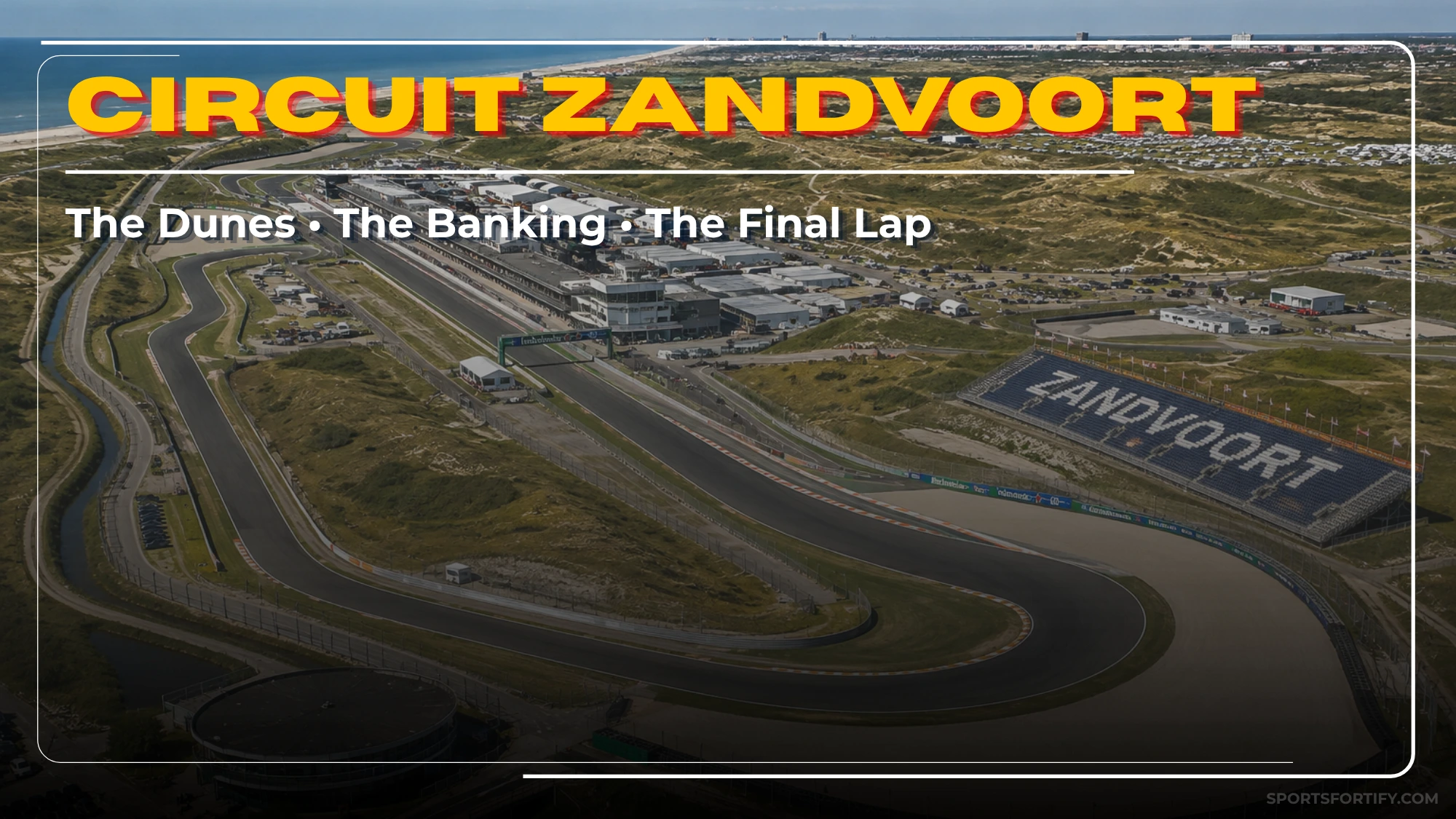
Circuit Zandvoort is a 4.259 km FIA Grade 1 circuit carved into the coastal dunes of North Holland, Netherlands, roughly 35 km west of Amsterdam. It is best known for two of the steepest banked corners in modern Formula 1, and 2026 marks its final year hosting the Dutch Grand Prix under the current promoter agreement. The circuit holds 105,000 spectators and has run F1 continuously since its 2021 return, though its history at this exact stretch of coastline goes back to 1948.
Zandvoort Quick Facts
| 🏁 Circuit Length | 4.259 km |
| 🔄 Number of Laps | 72 |
| ↩️ Number of Turns | 14 |
| ⚡ F1 Lap Record | 1:11.097 (Lewis Hamilton) |
| 🏆 FIA Grade | Grade 1 |
| 👥 Capacity | 105,000 |
| 📅 First Grand Prix | 1952 |
| 🏗️ Circuit Opened | 7 August 1948 |
| 📍 Closest City | Amsterdam |
| 🕐 Time Zone | CEST (UTC+2) |
| 💶 Currency | EUR |
WHERE IS CIRCUIT ZANDVOORT?
Circuit Zandvoort sits in the coastal dunes of North Holland, Netherlands. Its coordinates place it at 52°23′20″N 4°32′27″E, roughly 35 km west of Amsterdam. The circuit backs directly onto the North Sea. Because of this, it holds one of the only genuinely seaside settings on the entire F1 calendar. For train times, ticket pricing, and the full 2026 sprint weekend schedule, see our Dutch Grand Prix 2026 Race Guide.
HOW LONG IS CIRCUIT ZANDVOORT?
Circuit Zandvoort measures 4.259 km per lap. A full Grand Prix distance covers 72 laps and roughly 306.587 km. The layout has shifted slightly across its history. It once ran as long as 4.307 km in earlier configurations. Then, during the Club Circuit era in the late 1980s, financial struggles shrank it briefly to just 2.526 km. The current Grand Prix Circuit dates from a 2001 redesign. Circuit architect Jarno Zaffelli later revised it again ahead of F1’s 2021 return.
CIRCUIT ZANDVOORT HISTORY
From Wartime Roads to a World Championship Round
Zandvoort’s origins trace back further than most fans realize. John Hugenholtz, the same designer later responsible for Suzuka, worked as track design advisor from July 1946. He built the layout partly over communications roads the German army had built during the occupation. The circuit opened officially on 7 August 1948. Formula One’s World Championship arrived in 1952, the year Alberto Ascari led a Ferrari 1-2-3 at the circuit.
Zandvoort was not a permanent calendar fixture even in its golden era. The race did not run in 1954, 1956, 1957, or 1972, mostly for funding reasons. Still, across its 1952 to 1985 stretch it hosted a genuine who’s who of the sport. Juan Manuel Fangio raced there. So did Jim Clark, who won four times. Jackie Stewart, James Hunt, Nelson Piquet, and Alain Prost all featured too.
Financial Collapse and the Lost Years
By the mid 1980s, noise pollution complaints and local political pressure pushed the circuit toward closure. CENAV, the operating body, went bankrupt in 1987. Much of the original site was then sold off for a holiday resort development, the Vendorado Bungalow Park. Land also went toward a golf course and football pitches. Bulldozers moved through most of the old layout in mid 1989. That left only fragments behind, the Hunzerug to Schievlak section and the old Marlboro Corner, as part of a shrunken interim Club Circuit. That circuit measured barely 1.5 miles.
The Verstappen-Driven Return
Formula One’s comeback to Zandvoort was not inevitable, and it did not happen quickly. An FOM invitation arrived in November 2018. A formal letter of intent followed in March 2019. Confirmation came on 14 May 2019. The circuit then spent roughly four million euros on infrastructure upgrades, including the two banked corners the venue is now famous for. After that, COVID-19 pushed the planned 2020 return back a full year.
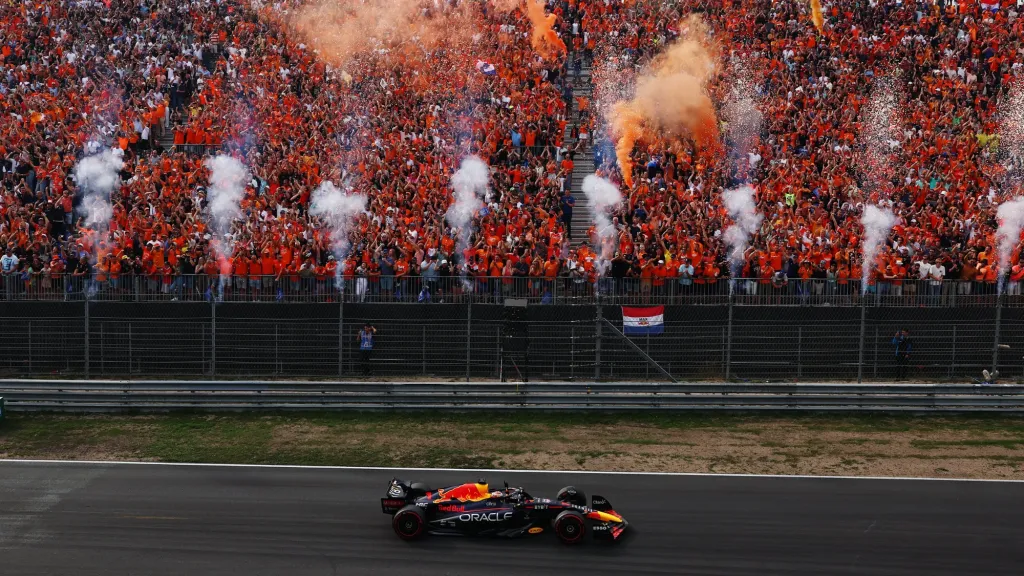
Formula One finally returned to Zandvoort on 5 September 2021, ending a 35 year hiatus. Max Verstappen won that race from pole in front of a home crowd that had waited over three decades for the moment. He repeated the win in 2022. That Verstappen connection is the single biggest reason Zandvoort came back onto the calendar at all. It’s also a large part of why its departure after 2026 carries so much weight.
THE BANKED CORNERS THAT DEFINE ZANDVOORT
Tarzan, Turn 1
Tarzan is Zandvoort’s opening corner and its most famous. It’s a wide 45 degree right-hander that has produced do-or-die overtaking moves since the circuit’s earliest days. The name comes from a local nickname rather than any driver or sponsor. Even now, it remains the primary passing zone on the entire lap.
Hugenholtzbocht, Turn 3
Named after the circuit’s original designer, Hugenholtzbocht carries an 18 degree bank. That’s steep enough for two cars to run through side by side at equal speed, something the corner genuinely could not support before its 2021 rework. Drivers have called the banking itself the standout feature of the entire lap.
Arie Luyendijkbocht, Turn 14
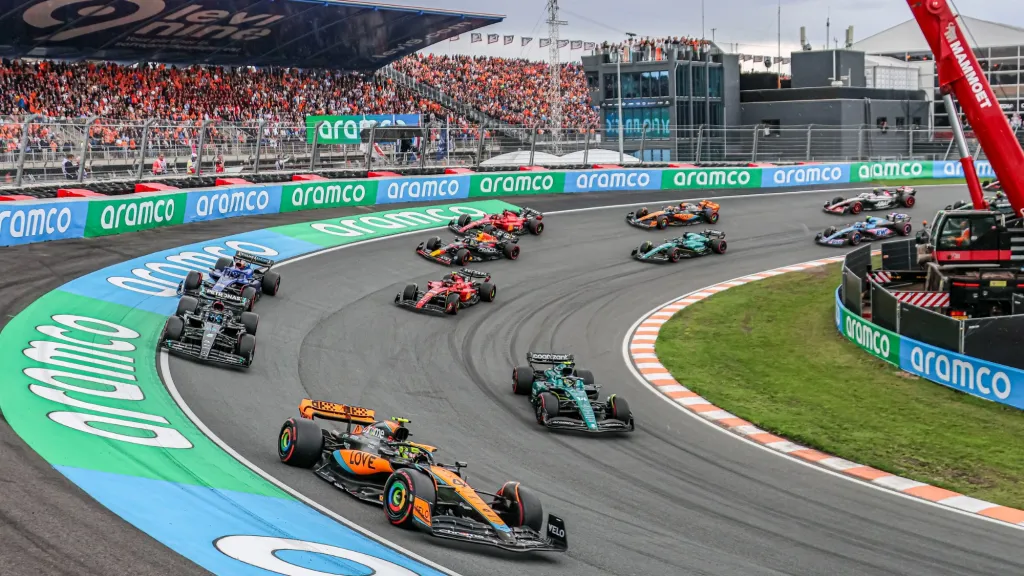
The final corner, Arie Luyendijkbocht, is named after two-time Indianapolis 500 winner Arie Luyendyk. It carries an even steeper 19 degree bank. That’s more than twice as steep as the banking at Indianapolis itself, and steeper than the 21 degree banking on the original Monza oval. The corner feeds directly onto the start-finish straight. So getting the exit right here shapes the entire following lap.
The Rest of the Lap
Beyond the two showpiece banked corners, Zandvoort’s layout includes the fast, blind-crested Scheivlak, sometimes still called the Masters or Marlboro corner from past naming eras. It also includes the Hondenvlak esses, a low, flat sequence that punishes any driver carrying too much speed into the following section.
The Gerlachbocht, named after Wim Gerlach who died there in a 1957 sportscar crash, remains one of the circuit’s more demanding technical corners. That name is a reminder of Zandvoort’s genuinely difficult safety history behind its current modern barriers.
SAFETY HISTORY AT ZANDVOORT
Zandvoort’s history includes several serious accidents that shaped how the circuit was rebuilt over time. Piers Courage died at the Tunnel Oost section in 1970. Roger Williamson died in a 1973 crash that became one of the most widely cited low points in F1 safety history, partly due to the marshalling response at the time.
Rob Slotemaker, after whom the Slotemakerbocht is named, died during a non-F1 race there in 1979. These incidents, among others, are part of why the modern circuit runs SAFER barriers and significantly revised run-off compared to its original 1948 layout.
GETTING TO CIRCUIT ZANDVOORT
Circuit Zandvoort sits roughly 30 minutes by train from Amsterdam Centraal. Round trip tickets typically run around €6 each way outside race weekend surge pricing. Bicycle parking is available on site for fans staying locally. The circuit also runs a small on-site programme of Track Days and driving experiences for fans wanting to experience the banking outside of a Grand Prix weekend. For full race weekend transport details, shuttle information, and walking times from the station.
WHAT EVENTS DOES CIRCUIT ZANDVOORT HOST?
Beyond Formula One, Circuit Zandvoort has hosted an unusually wide range of series across its history. DTM and A1 Grand Prix both raced there. So did GT World Challenge Europe, Porsche Supercup, and F1 Academy in the current era. The circuit even hosted the UCI Road World Championships cycling event back in 1959. Today, it also runs an annual Circuit Run for non-motorsport visitors wanting to experience the lap on foot.
FREQUENTLY ASKED QUESTIONS
Circuit Zandvoort measures 4.259 km per lap. A full Formula One race distance covers 72 laps and approximately 306.587 km.
Circuit Zandvoort is located in North Holland, Netherlands, directly on the North Sea coast. It sits roughly 35 km west of Amsterdam, about a 30 minute train ride away.
Circuit Zandvoort was designed with input from John Hugenholtz, who later went on to design the Suzuka Circuit in Japan. Sammy Davis, the 1927 Le Mans winner, also served as an early track design advisor.
Zandvoort added its steep banking, 18 degrees at Hugenholtzbocht and 19 degrees at the final corner, during preparation for Formula One’s 2021 return. The goal was to enable genuine side by side racing at two corners that previously could not support it.


2 Comments